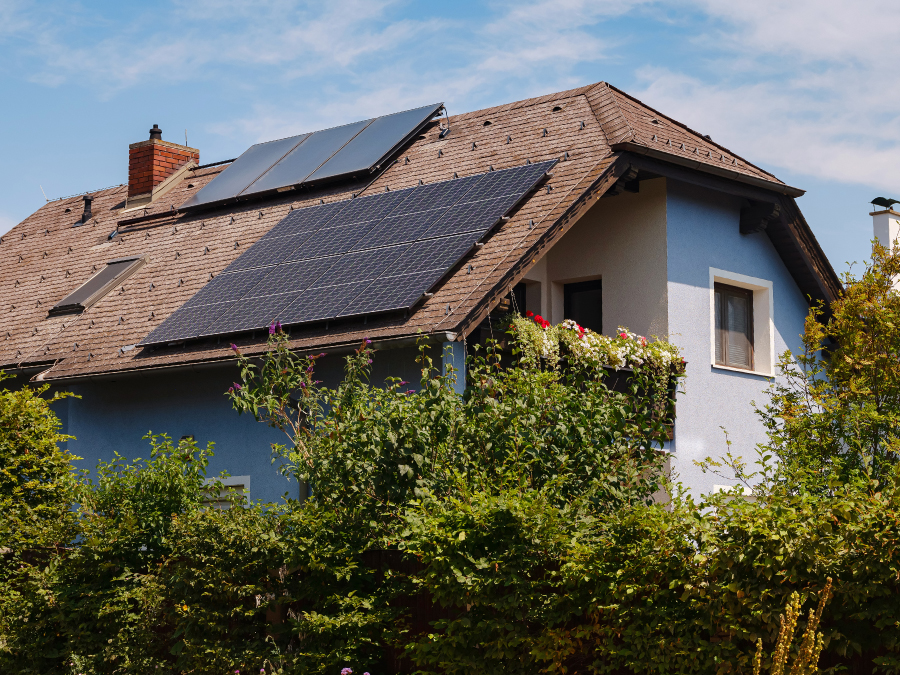
Battery Options for Your Home Solar System
For Bay Area and Central Valley homeowners, going solar used to be a no-brainer. Sunshine is California’s most abundant energy resource. However, recent changes to California’s net metering mean utilities don’t pay nearly as much for excess solar sent back to the grid, and there are fewer incentives available. That leaves the question of whether or not to get solar up in the air.
Long story short: it’s more valuable than ever to make, keep, and use your own energy at home. That’s where a home battery comes in.
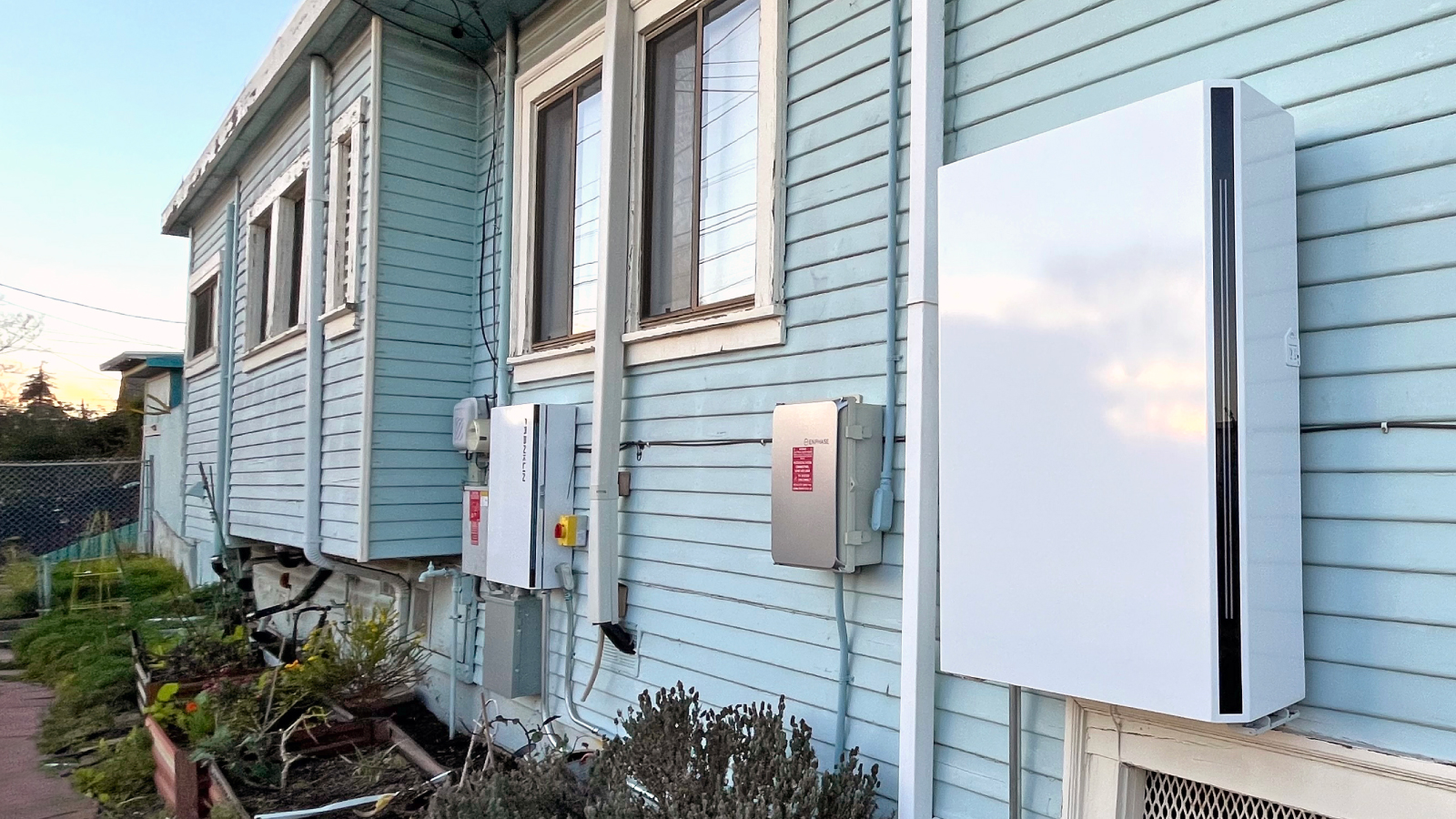
Depending on how it’s configured, a home battery can protect you during outages, lower your monthly energy bills, or some combination of both. Before deciding whether battery storage makes sense for your home, it helps to start with a simple question:
What do you actually want your battery to do?
For most homeowners, the answer usually falls into one of two categories:
- Maximizing savings and getting more value from solar
- Keeping the lights on during power outages
Once you know what you want your battery system to do, choosing the right setup becomes much easier.
If Your Primary Goal is Maximizing Financial Savings
If you’re interested in lowering your monthly electric bill and getting the most value out of your solar system, an arbitrage battery system may be the best fit for your energy needs. This is also sometimes referred to as a consumption-only battery.
The idea is simple: electricity is cheaper at certain times of day (often morning or late at night) and expensive at others (evenings, during peak demand). An arbitrage battery stores energy when it’s cheap — whether from your solar panels or directly from the grid — and lets you use it when rates are high.
Under California’s new Solar Billing Plan, pairing arbitrage storage with solar allows you to get the most financial value out of your solar panels. Because you’re capturing and storing solar energy you’d otherwise export back to the grid for relatively little credit and using that energy when prices are highest.
The trade-off is that arbitrage storage systems are optimized for savings, not necessarily for outage protection. For that, you would need to add backup capabilities.
Pros of arbitrage-focused storage:
- Reduces peak-hour energy costs
- Cheaper to install relative to backup storage
- Improves the financial return on solar
- Helps shift energy use to alleviate stress on the grid
Cons:
- Limited or no outage protection
- Savings depend on your utility rate plan
- The battery cycles more frequently, which can lead to wear over time
If Your Primary Goal is Outage Protection
If your primary concern is keeping your home running during blackouts, wildfires, or grid instability, a backup battery system is likely the right fit for your household.
Backup batteries are designed to power essential parts of your home when the grid goes down. They’re a good fit for households with kids, medical equipment, work-from-home setups that can’t afford downtime, or anyone living in an area where outages are more common. That said, backup batteries are not designed to power your whole home (like AC or EV charging) indefinitely.
Think of a backup battery less like a generator that fully replaces the grid, and more like a temporary reserve that keeps essentials running until power is restored.
The trade-off is cost. A backup-focused system usually comes with a higher upfront price, and the backup power may sit unused on ordinary days. If outages are rare where you live, the steep investment may not be worth it.
Pros of backup-focused storage:
- Provides peace of mind during severe weather and PSPS events
- Keeps critical systems running when you need them most
- Helps maintain stability for medical and work-from-home needs
Cons:
- Higher upfront cost
- Backup power may go unused on normal days
- Generally not suitable for larger appliances
- Possibly fewer bill savings than an arbitrage-focused battery (the more energy is stored for a backup scenario, the less you have to power your home during peak times)
Matching the Right Setup to the Right Goal
Once you know what you’re optimizing for, choosing the right solar (and battery) configuration becomes clear.
Most households fall into one of these four setups:

Option 1: Solar only
Lowest upfront cost. Can power your home during the daytime, but won’t provide power at night or during an outage. Will export unused electricity generated from solar panels to the grid. Less financial benefit under California’s current net metering rules.

Option 2: Solar + arbitrage battery
Best for time-of-use (TOU) rate customers and EV owners. Maximizes bill savings but doesn’t necessarily offer outage protection.

Option 3: Solar + backup battery
Ideal for outage-prone areas or medical/work-from-home needs. Designed for temporary outages, not long-term power, so it requires some energy conservation and planning. Can provide arbitrage too, but has a higher upfront cost.

Option 4: Whole-home battery
Manages all power sources: grid, solar, generator. Maximum flexibility and resilience. Significantly higher investment. (For a more technical breakdown, check out this guide from SolarTech.)
How Energy Flows in a Solar + Battery Home
Think of your home energy system as a priority chain:
Solar panels generate electricity.
↓
Your home uses that energy first.
↓
Extra energy charges your battery.
↓
Stored energy is used later, usually in the evening (also known as arbitrage).
↓
If your battery has backup capabilities, the battery powers your selected circuits during an outage.
Choosing the Right Solar Storage Solution
Every household has different needs. A home in a Fire Hazard Severity Zone with a family member on a home oxygen machine has very different needs than a suburban homeowner who mostly wants to lower their monthly energy bill.
Here are four questions to help you narrow down which solar storage solution is best for yours:
- What’s your outage risk? Do you live in a fire zone or an area prone to PSPS events? If so, backup storage deserves serious consideration.
- What do your evenings look like? High AC usage and EV charging mean you’d benefit most from capturing your solar energy to use later. In that case, arbitrage is a good fit.
- What rate plan are you on? Time-of-use plans with a big peak/off-peak price difference make arbitrage storage a solid investment.
- What are your energy goals? Household resilience? Savings? Climate impact? All of the above? Some whole-home systems can do a bit of everything — at a higher price point, of course.
The best system is the one that fits your household goals. With around 265 days of sunshine a year in the Bay Area and San Joaquin County, the sun is already doing its part. Now it’s just a matter of figuring out the best way to put it to use.
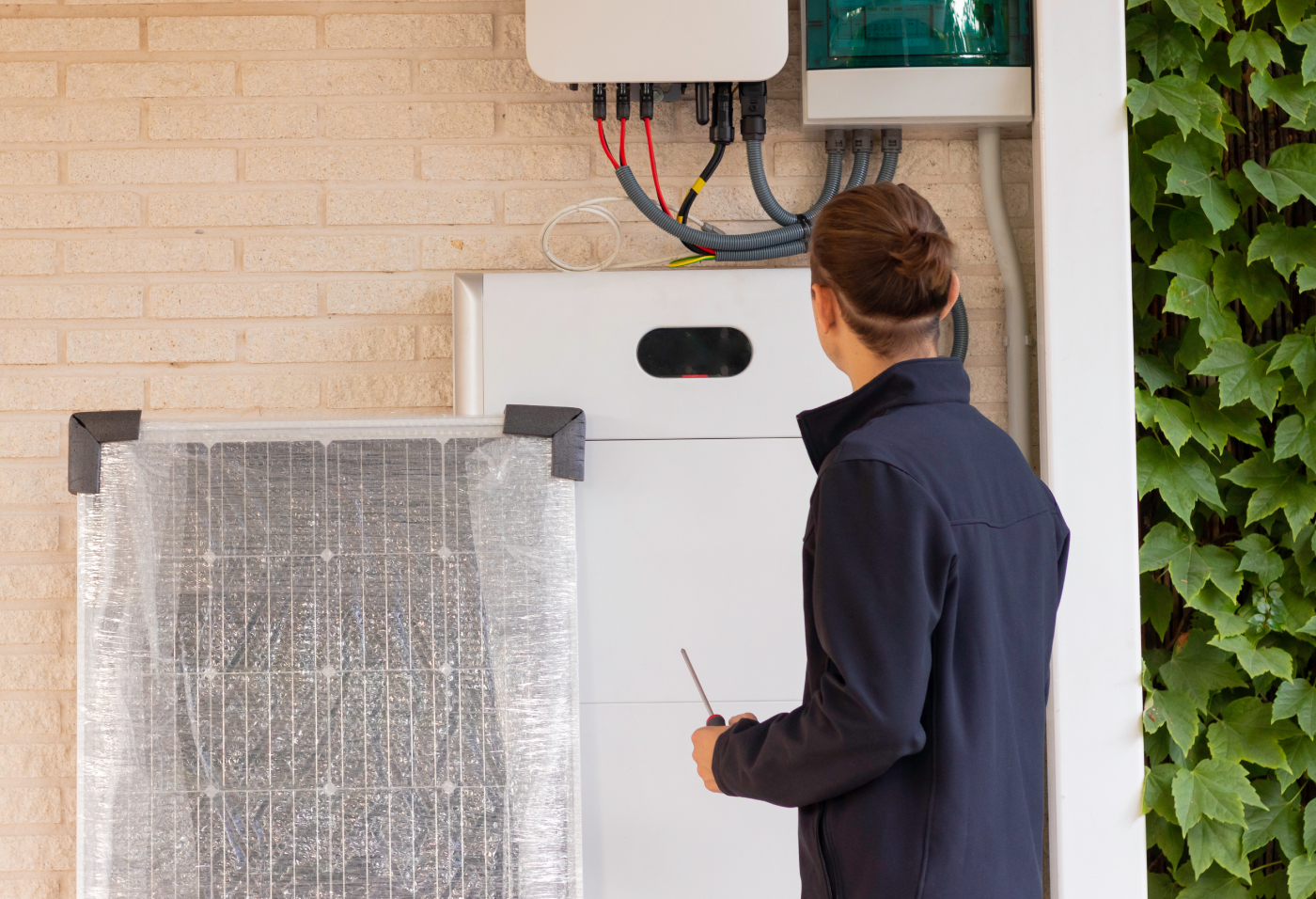
Are you an existing Ava customer thinking about solar and storage solutions, or looking to add a battery to a system you already have? Our SmartHome Battery incentive program can help offset the upfront cost with installation rebates, and help you earn more with ongoing participation payments.