Faces of Ava: Piedmont Mayor Betsy Andersen
November 13, 2025
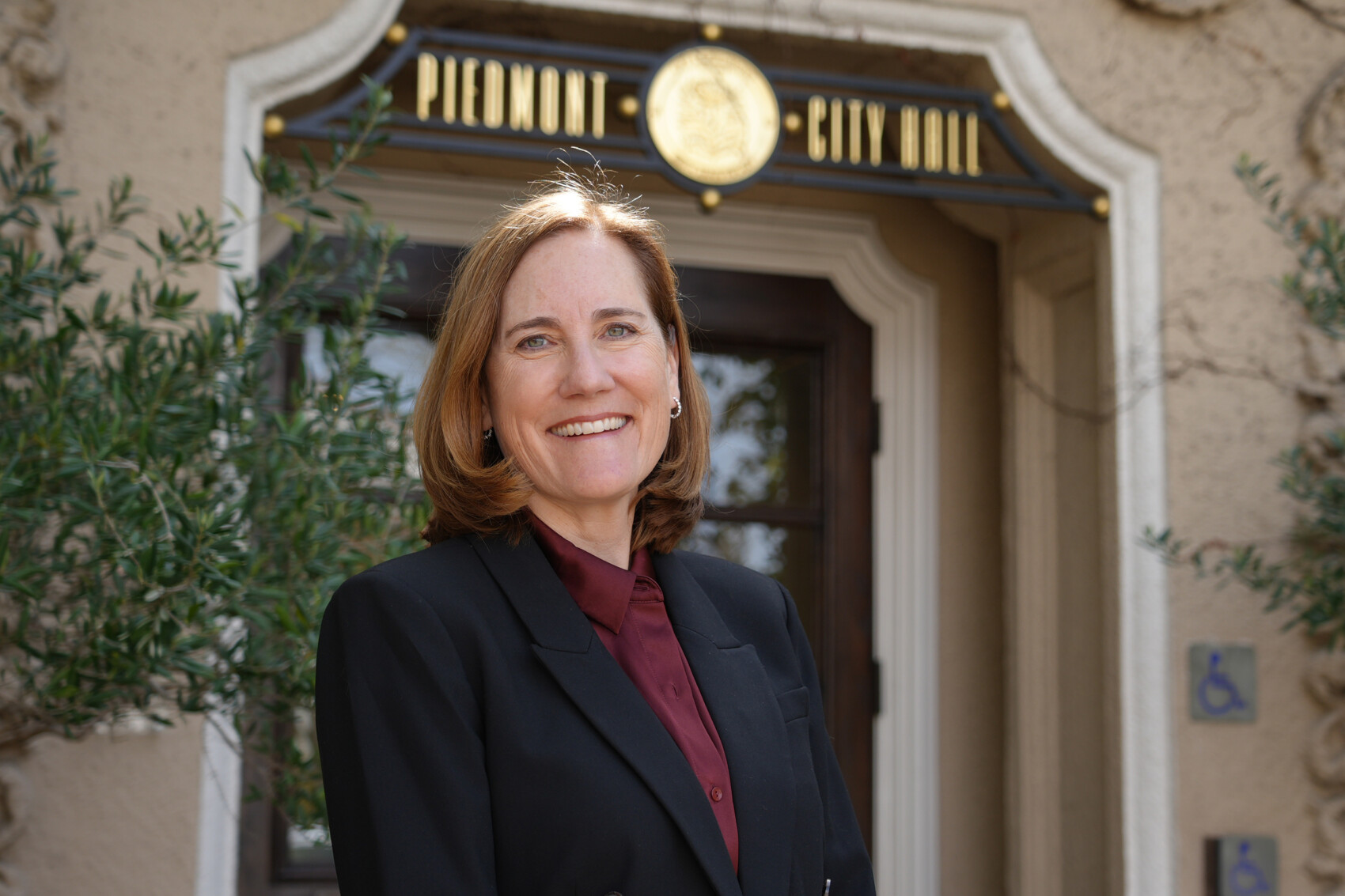
Betsy Andersen didn’t set out to become a climate leader. After earning her J.D. from UCLA and practicing trust and estate law for nearly two decades, she found herself drawn to the civic life of Piedmont, the small East Bay city where she grew up.
“I have pursued leadership positions my entire life,” Andersen says. “It is through these experiences that I learned three important lessons: be present, ask questions, and—perhaps most importantly—listen.”
That listening has paid dividends. Since being appointed to the Piedmont City Council in 2017, Andersen has helped shepherd the city through an ambitious climate agenda. Piedmont was the first city to opt into Ava’s (then called East Bay Community Energy’s) 100% renewable energy service plan in 2018, hired a full-time Sustainability Program Manager, became one of the first cities in California to pass energy efficiency reach codes for existing buildings, and began building one of the first all-electric municipal pools in California.
In December 2024, her colleagues on the City Council elected Andersen Mayor of Piedmont. Shortly after, she became Board Chair of Ava Community Energy, having served as a Board member since March 2023.
Small City, Regional Context
Piedmont is unusual. With just over 11,000 residents packed into 1.7 square miles, it’s entirely surrounded by Oakland. The city has no parking lots—just street parking and residential garages—and no significant commercial district. What it does have is an intensely engaged population and a volunteer-driven city government.
“Piedmont is the beneficiary of a very highly engaged residential community. We have amazing volunteerism in our public schools and on our city commissions. People feel deeply connected to this community.”
That connection extends beyond Piedmont’s borders. Andersen is quick to push back on any notion that Piedmont operates in isolation. “Most everything we do outside of our homes is interfacing with the city of Oakland,” she says. “We’re shopping in Oakland, eating in Oakland, even charging our EVs in Oakland because we don’t have any public chargers—yet.” (A project to bring four fast EV chargers to the heart of Piedmont’s civic center is underway, in partnership with Ava.)
Regional partnerships are critical for climate action, and Andersen sees Piedmont’s role as broader than just serving its own residents. Andersen cites collaboration with Ava, StopWaste, and the Alameda County Transportation Commission as key to achieving the entire county’s goals. “We want to be a good regional partner,” she says. “Whether that’s housing, transportation, or electrification, we show up and participate in the conversation.”
Building an All-Electric Pool

No project better illustrates Piedmont’s climate ambitions than its new community pool. The original facility, built in 1964, was showing its age. Equipment was so old that staff had to bid for scarce replacement parts on eBay. The pool was leaking significant amounts of water, and it simply couldn’t meet demand from swim teams, water polo, lap swimmers, and families.
In 2020, the community passed a bond measure to finance a replacement. With significant input from residents, the Council decided that if the facility would serve the community for the next 50 years, it needed to be fully electrified. The former pool was the City’s single largest source of municipal greenhouse gas emissions. In 2023, Ava provided a $750,000 interest-free loan to the City to help fund the electrification.
“This is a very smart pool,” Andersen says, describing the 20 heat pumps, solar photovoltaic (PV) and photovoltaic-thermal (PVT) panels, and the many complex computer systems that must work together to continuously treat and warm nearly 500,000 gallons of water in real time. By choosing to go all-electric, Piedmont is projected to avoid over 4 million kilograms of carbon emissions over the next 25 years. Construction work on the pool is finished, but it has not yet begun operations.
Making Home Electrification Accessible
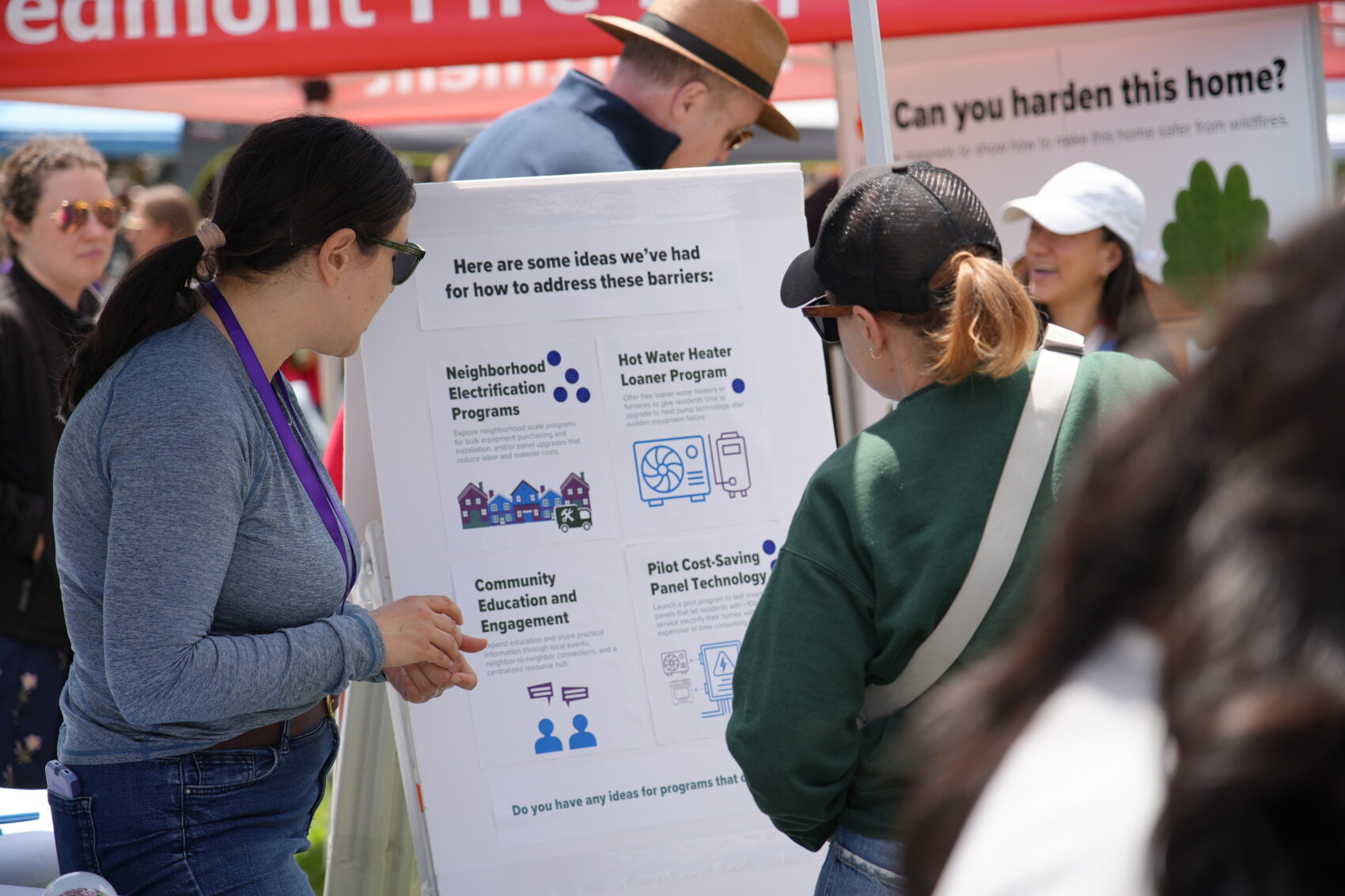
Beyond municipal facilities, Andersen has focused on making home electrification easier for residents. In 2023, the city established an Electrification Task Force—what Andersen calls “a brain trust” of engaged residents working to identify and lower barriers to transitioning Piedmont’s aged building stock off of natural gas.
“We have amazing constituents who have volunteered to be on this task force,” she says. “They’re looking at both economic and physical barriers to electrification, and really trying to think about how we as a city government can incentivize the transition.”
So far, the task force has completed a robust research phase: working with the City’s Sustainability Program Manager to survey community members on their experience and perceptions around building electrification, review the data around Piedmont’s existing housing stock and energy use, and collect information on strategies used in other cities. The team is now in the process of narrowing potential solutions into a framework that will provide a roadmap for moving Piedmont forward. Next year, a draft “Existing Building Electrification Strategy” will be shared for public review and comment before coming to the City Council for adoption.
Still, challenges remain. Piedmont’s older housing stock doesn’t always lend itself easily to electrification, and residents are also experiencing high electricity rates and even higher insurance rates, driven by increased wildfire risk throughout California. “This economic pressure affects households across income levels—and it reinforces why Ava’s dual mandate of clean energy and competitive rates matters. We can’t ask people to electrify their homes if their monthly costs become unmanageable. The transition has to be affordable for it to happen at scale.”
Andersen credits the city’s decision to invest in a dedicated sustainability staff member as a key driver of progress. “In a small city like ours, this body of work would not have moved forward at the same pace—or at all—without someone on staff focused on climate action. Committing ongoing resources sends a powerful message that sustainability isn’t just a goal on paper; it’s a commitment woven into everything we do.”
Federal Headwinds, Local Determination
Andersen was sworn in as an Ava Board member in March 2023. In January 2025, she was elected as Vice Chair. When Pleasanton Mayor Jack Balch stepped down from his position as Ava Board Chair in July, the Board unanimously voted to approve her as his replacement.
Asked what motivated her to step up as Chair, Andersen doesn’t hesitate. “What’s happening at the federal level made me want to double down on what we’re doing at Ava because it is so important,” she says.
“Given the very real consequences of climate change, it’s hard to think of anything more important to be working on than making clean energy accessible and affordable to our communities.”