Faces of Ava: San Leandro Mayor Juan González
April 3, 2026
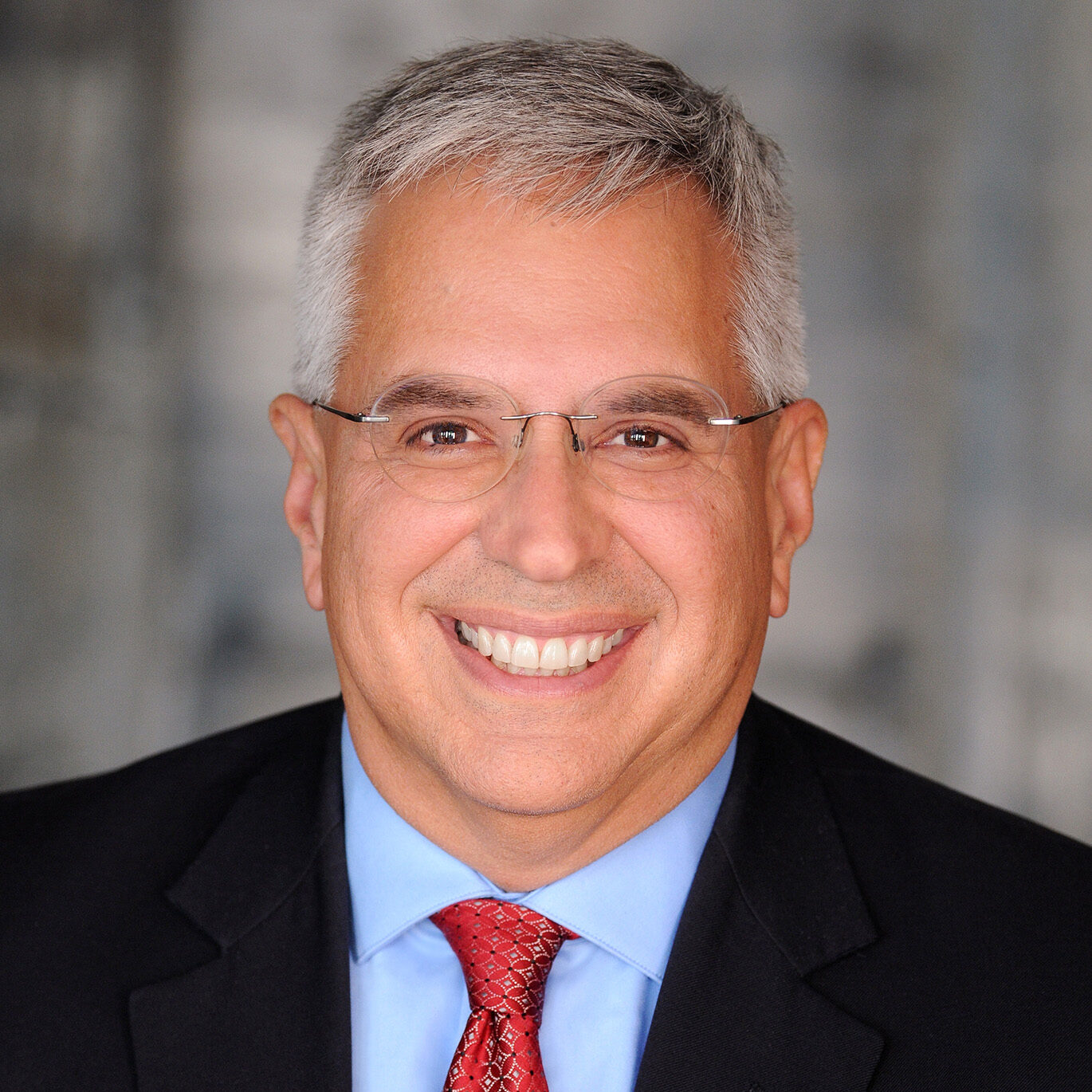
Juan González has spent his career investigating how institutions serve—or fail—the people who depend on them. As an MIT-trained economist and forensic professional, he examined whether corporations were doing right by their stakeholders. Now, as San Leandro’s mayor and vice chair of Ava’s Board of Directors, he’s continuing to ask hard questions about energy affordability and accountability.
Always Asking Why
González was not like other kids when it came to asking “why.”
As the son of two educators in Texas, he grew up as an “education brat.” His father had different teaching jobs at state universities, so the family moved frequently around Texas. They eventually settled in the Houston area, where Juan went to high school.
Money and economics piqued his interest as early as the age of 11. While other kids his age may have asked about sports or the weather, his questions were more like: What causes inflation? Why does the stock market go up?
After finishing his undergrad degree in economics at the University of Texas at Austin, a professor guided him to study economics at MIT.
His big “why” question at MIT was about social safety net policies, like job training, education, housing, and food assistance. Specifically, he was curious about “welfare recidivism.”
“The safety net helps some people bounce back up,” he explains. “But others stick to the net, and it becomes a way of life.”
Unfortunately, he learned that the data didn’t exist to analyze his questions. But there was plenty of data on the impact of child care, so he pivoted. He finished his PhD dissertation, “Child care and female labor supply–the influence of quality and price on mothers’ work decisions,” in 1991.
A Career in Investigative Analytics
His career started at Putnam Hayes & Bartlett, a Boston-area consulting firm. He spent the majority of his first year there working in Spain on a proposed restructuring of the Spanish electrical market. “I learned a lot about utility policy, technical issues, subsidies, dispatch order, and so on,” he says.
He then moved to the international accounting firm KPMG (one of the “Big 4”) in 1993, where he worked mostly with corporate clients on forensics.
“Forensics refers to analytical work that is performed at a level of detail and reliability such that it can serve as evidence in court, if necessary,” he says. While his work did serve as evidence in trials and other dispute forums, his work with clients often served to address or reduce risk exposure.
“I worked with a retailer once who had a credit card,” he recalls. “They didn’t calculate interest rates correctly, so they asked us to figure out how to fix it. Even though no one ever complained, they took the high road and refunded $100 million to their customers. It was all about their brand reputation. They said, ‘We never want to diminish our brand. We do the right thing.’”
He also led dozens of projects with electric utilities. “While utilities weren’t the focus of my career, I did deliver several engagements to this industry segment,” he says. As utility markets restructured in the 1990s, a recurring issue was the relationship between utilities and their newly deregulated affiliates. He led a team at KPMG evaluating compliance with affiliate transaction rules. “We had to keep an investigative mindset, and not just be a rubber stamp to the clients,” he says.
Turning to Public Service
After 30 years at KPMG, rising to the level of principal, he retired with an eye toward public service.
“I had always thought about how I could give back to my community,” he says. “I was just raised that way. I remember going with my mom to deliver food to an old lady in a dark house in the country. My dad used to go after work to buy blankets for homeless people.”
“I planned to do it when I got older, and I finally asked, ‘When am I older?’”
He started by serving in a variety of volunteer roles, such as with his kids’ school PTA, and on the board of nonprofit organizations like the San Leandro Education Foundation, Big Brothers Big Sisters East Bay, and Side by Side.
Due to his background in economics, he was recruited to serve on the San Leandro Community Advisory Budget Task Force, which started his involvement with city government.
González was elected mayor of San Leandro in 2022, his first time in public office. He won by only 294 votes out of 20,000 cast.
“I thought the City would benefit from more attention from its mayor,” he says. “The job of mayor pays only $40,000 a year, so it is not necessarily full-time. The other candidates wouldn’t make the commitment to do it full-time, but I did.”
As mayor, he sits on many regional government bodies, including the boards of Ava and the regional Air District, and was appointed last year to the National League of Cities (NLC) Small Cities Council.
Building San Leandro’s Economy
His position on the NLC Small Cities Council gives González a platform to pursue his top priority, economic development, by attracting businesses to San Leandro.
“As a smaller city, we’re nimble,” he told Business View magazine, pointing out how San Leandro’s smaller bureaucracy allows it to fast-track permitting and other processes that can be bogged down in larger cities. This flexibility is a selling point for businesses looking to avoid red tape while benefiting from the Bay Area’s proximity to world-class research institutions and capital investors.
González celebrates the development of San Leandro’s ten-year economic development strategy, released in 2024. It highlights San Leandro’s plentiful industrial areas and identifies Clean Tech, Food Tech, Biomedical, Hardware/Robotics, and Artificial Intelligence as emerging areas for growth.
Among the city’s food manufacturers is Torani, a 100-year-old maker of flavored syrups used in Italian soda, coffee, and other drinks. They fill 200 bottles per minute in their San Leandro plant, with over 160 flavors—everything from vanilla to créme de banana to forest pine.
The city has a growing number of renewable energy companies like Halus Power Systems, which refurbishes mid-sized wind turbines. As wind turbines have grown larger, models under one megawatt are no longer manufactured. Halus recovers Danish-made Vestas turbines of 90 to 600 kilowatts and rebuilds them for farms, rural factories, villages, and other customers who want a smaller machine. Thousands of such turbines were put in Altamont Pass in the 1990s, but replaced with bigger turbines in recent years—including the wind farm that serves Ava.
Halus general manager Louis Rigaud says, “One great thing about being in San Leandro is that we are surrounded by machine shops and suppliers. Being in this area is a pretty central location.”
Many businesses get their start at the Gate510, an innovative tech and biotech campus that is home to the area’s cleantech and sustainability-oriented entrepreneurs. A notable graduate is Coreshell Technologies, which makes affordable, sustainable electric vehicle batteries with metallurgical silicon anodes, offering lower cost and longer range for EVs. Coreshell was recently awarded the top prize—and a $1 million investment—at the 2025 Startup World Cup.
Another notable innovator is Fuse Energy Technologies, which brings fusion energy research and development to San Leandro. In 2025, Fuse received a tax credit and $152 million investment from Governor Gavin Newsom’s Office of Business and Economic Development.
González sees Ava as a component of attracting forward-looking businesses, as well as lowering the cost of living for customers.
“People are very concerned about affordability,” he says. “Something is broken in the state of California. It’s shocking how expensive energy is. Cleaner and cheaper are the two top priorities—and that’s Ava’s value proposition.”
Despite his deep training and experience in economics and business management, his approach to governance is simple.
“We’ve got to take care of the basics,” he says, like clean streets, safe neighborhoods, and well-maintained parks. “When you do that and invite people to come, that will drive economic development.”