
How Ava Sets Electricity Generation Rates
Electricity bills can be hard to decipher. Between generation, delivery, and various fees, it’s not always clear who’s charging you for what—and why. We’re here to help clear it up.
Here’s how Ava sets our portion of your costs, what influences electricity prices, and how our rates compare to PG&E’s.

Electricity Generation vs. Delivery
Electricity costs include two distinct services:
- Generation (power plants): This is what Ava provides. We procure clean electricity from renewable energy projects and on wholesale markets, then pass it along at stable, competitive rates.
- Delivery (getting power to you): PG&E owns and maintains the transmission lines, distribution systems, and meters. They deliver the electricity that Ava generates, and also handle billing.
You get a single bill from PG&E each month, which includes separate charges for both services. If you decide to opt out of Ava, PG&E will charge you for both generation and delivery in a single bundled cost.
Where Does Your Money Go?
The majority goes to PG&E for electricity delivery and gas services (if PG&E is your gas provider). These charges are the same whether you’re an Ava customer or not.
The generation portion comes to Ava. We use these funds to buy electricity on your behalf, maintain customer service operations, and run local programs. Because we’re a public agency with no shareholders, we reinvest surpluses into programs that benefit the community.
How Ava Sets Generation Rates
Our Rate-Setting Process
Ava’s Board of Directors (Mayors, Councilmembers, and County Supervisors from each community we serve) sets rates annually in a transparent public process. Board members review and weigh rate options, take community input from our Community Advisory Committee and via public comment, and then vote on the proposed rates, which are based on forecasted wholesale electricity costs, plus all fees that PG&E charges Ava customers.
We index our rates to PG&E because we’ve made a commitment to provide competitive pricing and more choices for clean energy. Since 2018, Bright Choice has always had lower rates than PG&E, and Renewable 100 is priced slightly higher for 100% renewable energy.
What Drives Wholesale Electricity Prices
Electricity prices are driven by supply and demand in a highly regulated and volatile marketplace. When demand is high or supply is limited, prices rise. When more power plants come online or demand moderates, prices fall.
For example, generation rates spiked between 2022 and 2025. Lots of factors converged during this period, including supply chain issues, global events, and extreme weather. These market pressures affected all electricity providers in California, not just Ava.
Rates are stabilizing now, in part because of new generation and battery storage projects that have come online recently. Ava has contracted for 1,495 megawatts (MW) of new solar, wind, and geothermal energy and 957 MW of battery storage. And across California, community choice aggregators like Ava have added 21 gigawatts of new clean generation capacity to the grid.
Ava’s Generation Rates in 2026
In January 2026, Ava lowered generation rates by 20% for Bright Choice customers and 15% for Renewable 100 customers. Across the board, our current generation rates are 2-3 cents per kWh cheaper than they were last year.
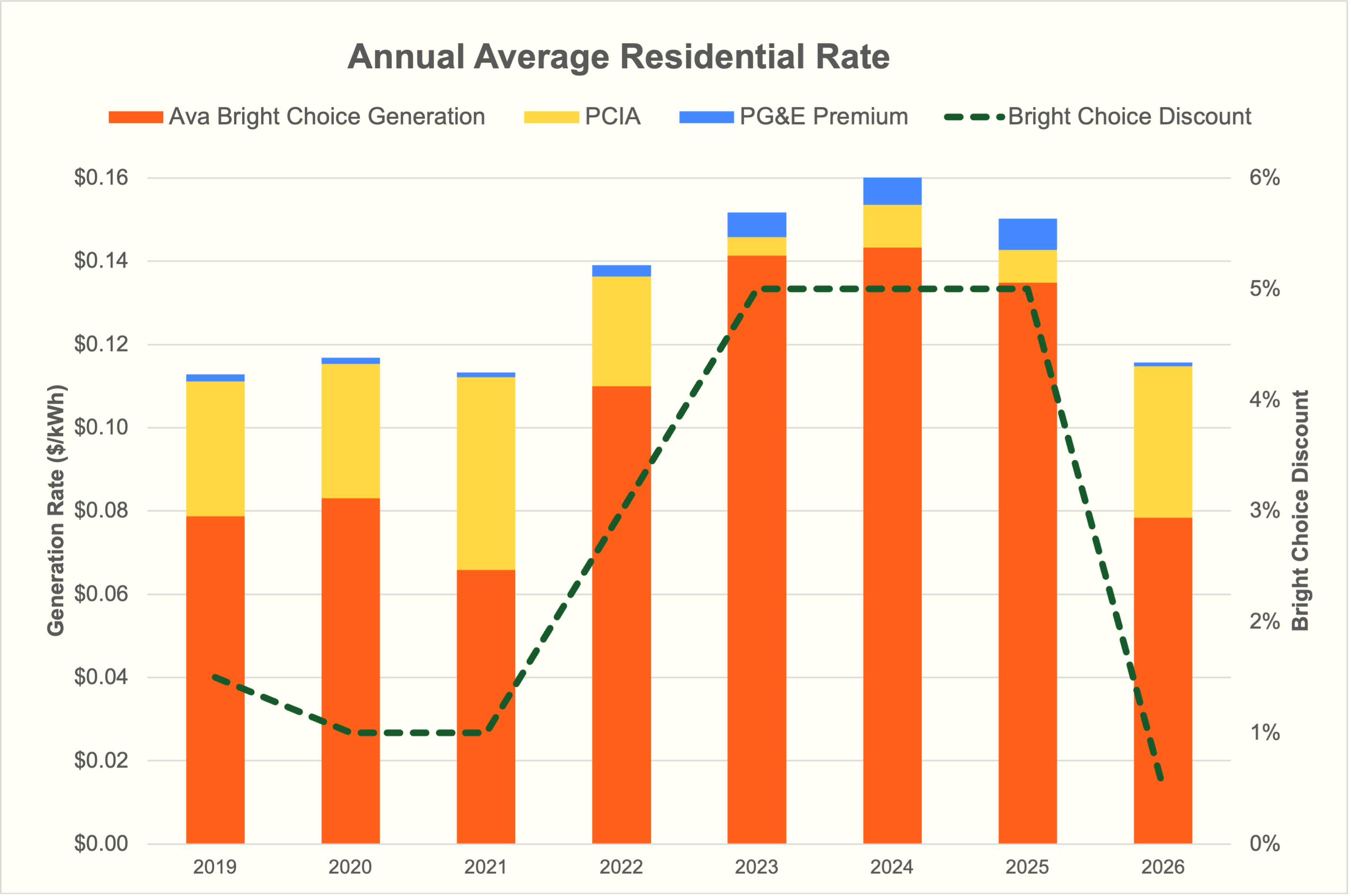
At the same time, PG&E increased its transmission and distribution rates, and is planning additional rate changes in March and September 2026. Ava’s rate decrease helps offset these increases.
How Ava Rates Compare to PG&E Rates
Ava’s purpose is to offer cleaner power at competitive rates to the communities we serve. As part of that commitment, we offer one plan that has lower rates than PG&E (Bright Choice), and one 100% renewable energy plan that is at a premium to PG&E (Renewable 100). Currently, Bright Choice is 0.5% cheaper than PG&E, and Renewable 100 costs 1¾ cents per kWh more than PG&E. Customers are free to choose the plan that best fits their priorities at any time.

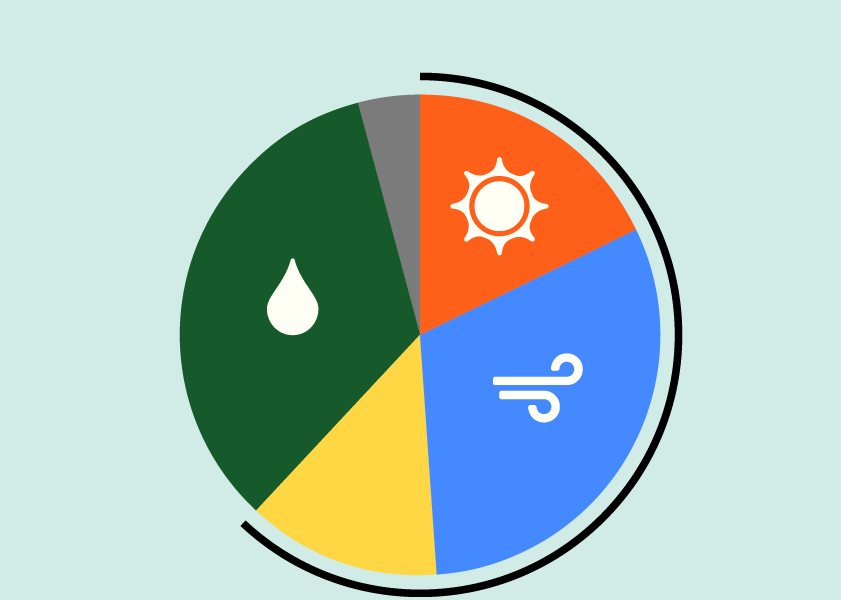
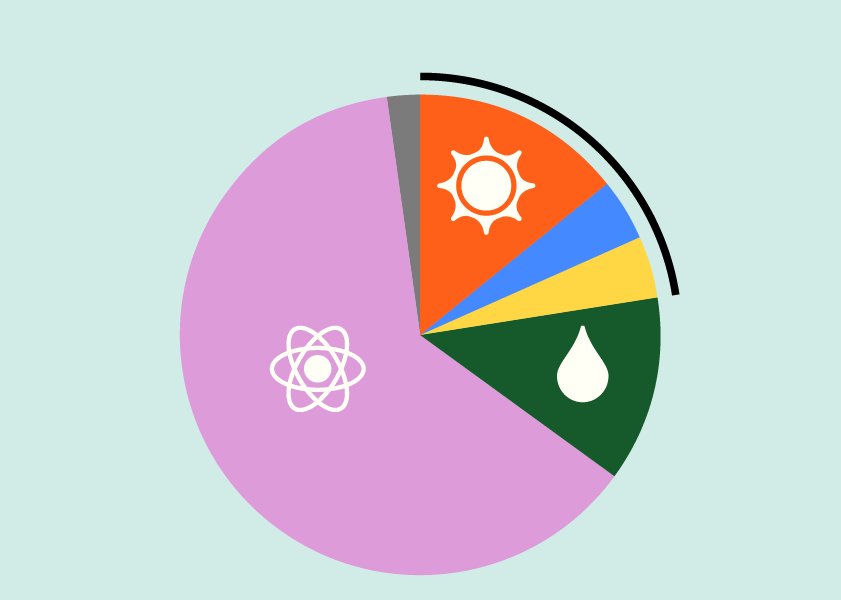
KEY
 | Solar |  | Wind |  | Biomass & Biowaste, Geothermal, Eligible Hydroelectric |
 | Hydro |  | Nuclear |  | Other or Unspecified |
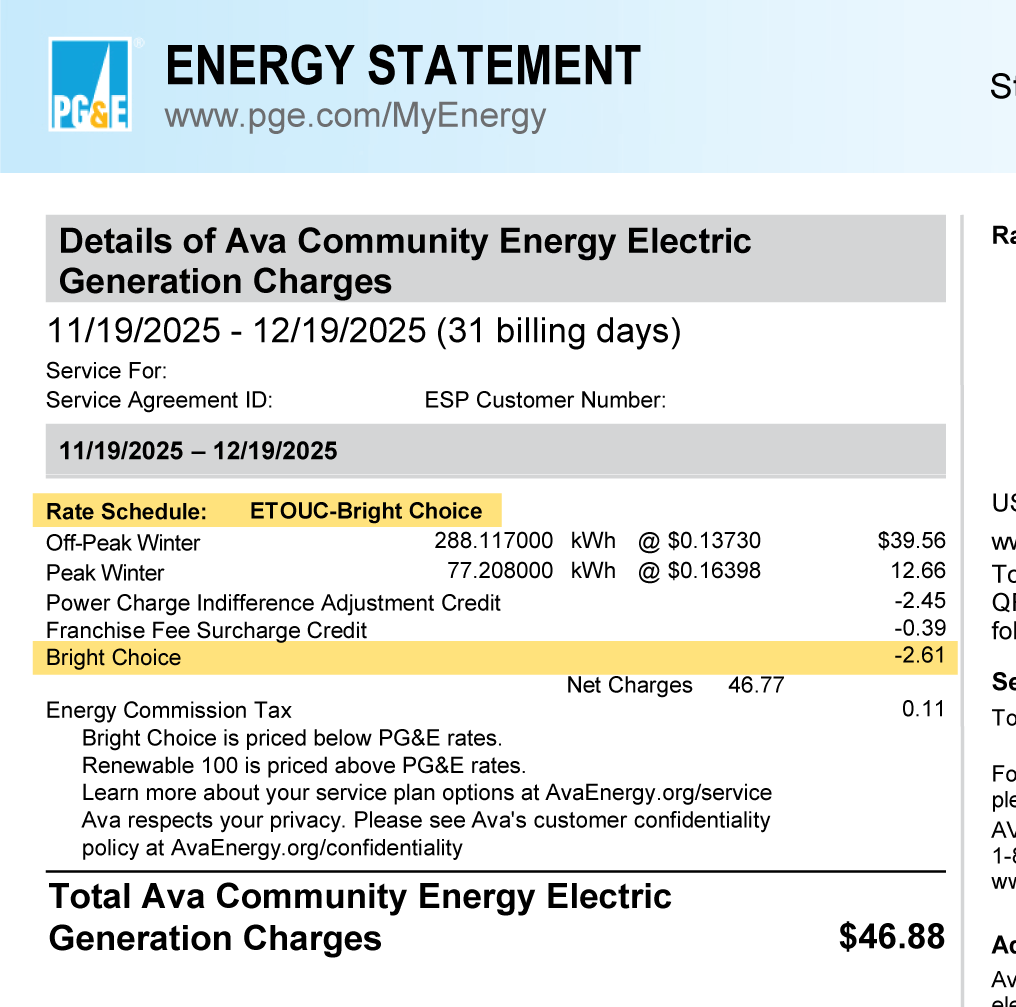
You can easily see the difference between what you’d pay to PG&E and what you’re paying with Ava on the generation page of your bill. Find the line that says “Bright Choice” (this should be a negative number, representing your savings) or “Renewable 100” (the premium for 100% renewable energy, like wind and solar). That amount represents the difference between Ava’s rates and PG&E’s rates.
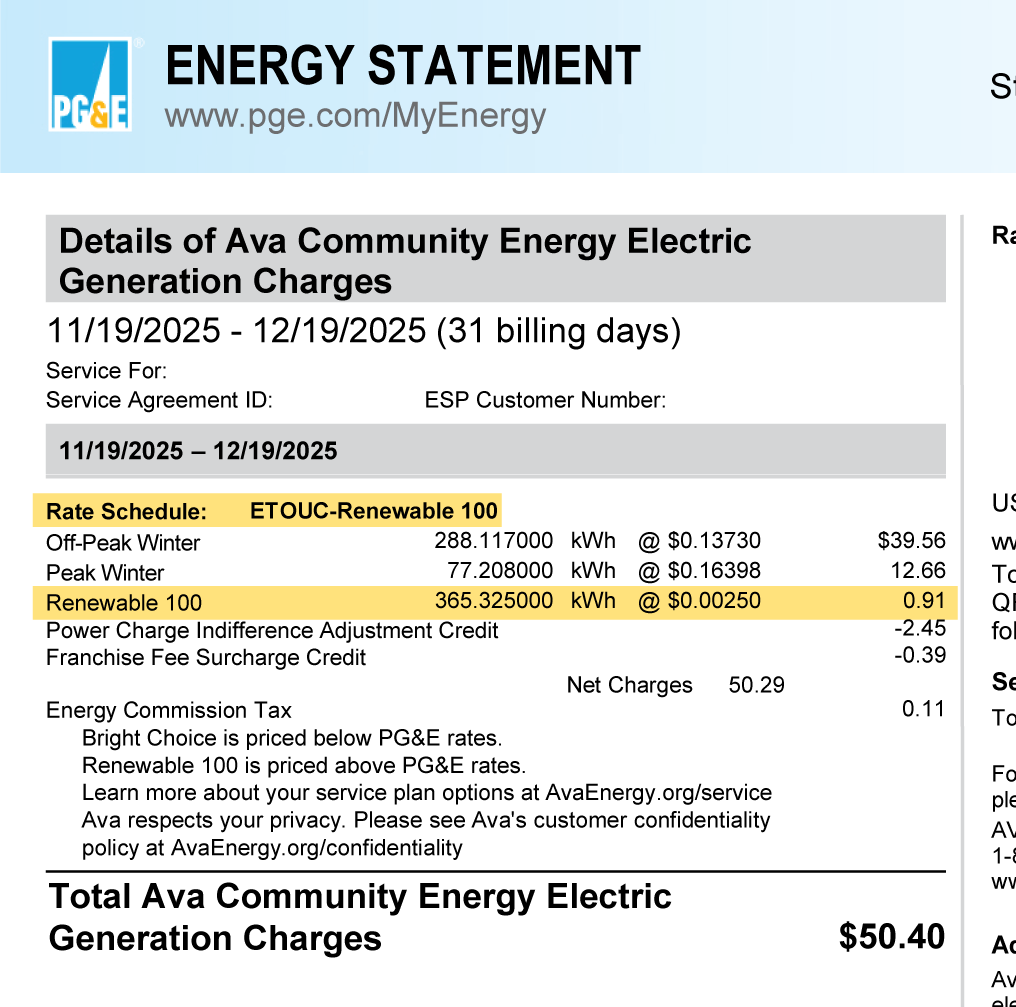
Since beginning service in 2018, Bright Choice has always been offered at a discount to PG&E, while Renewable 100 costs slightly more for 100% renewable energy. When wholesale electricity rates are high—like they were between 2022 and 2025—we increase our discount relative to PG&E’s rates. Now that generation rates are dropping in 2026, we’ve adjusted how our rates compare to PG&E to remain competitive while maintaining a balanced budget.
Ava Value Proposition Over Time:
| Ava Service Plan | June 2018– June 2020 | July 2020– June 2022 | July 2022– June 2023 | July 2023– Dec. 2025 | Jan. 2026– Present |
|---|---|---|---|---|---|
| Bright Choice | 1.5% below PG&E | 1% below PG&E | 3% below PG&E | 5% below PG&E | 0.5% below PG&E |
| Renewable 100 | 1¢ per kWh above PG&E | 1¢ per kWh above PG&E | ¾¢ per kWh above PG&E | ¼¢ per kWh above PG&E | 1¾¢ per kWh above PG&E |
For a deeper dive into the components of your PG&E bill, check out our Understanding Your Bill explainer.
The value Ava provides goes beyond competitive rates. We’re working to serve the needs of our community and to drive equitable, increasing access to clean energy. You get all the benefits of clean energy from a local agency, where your voice matters in decision-making.