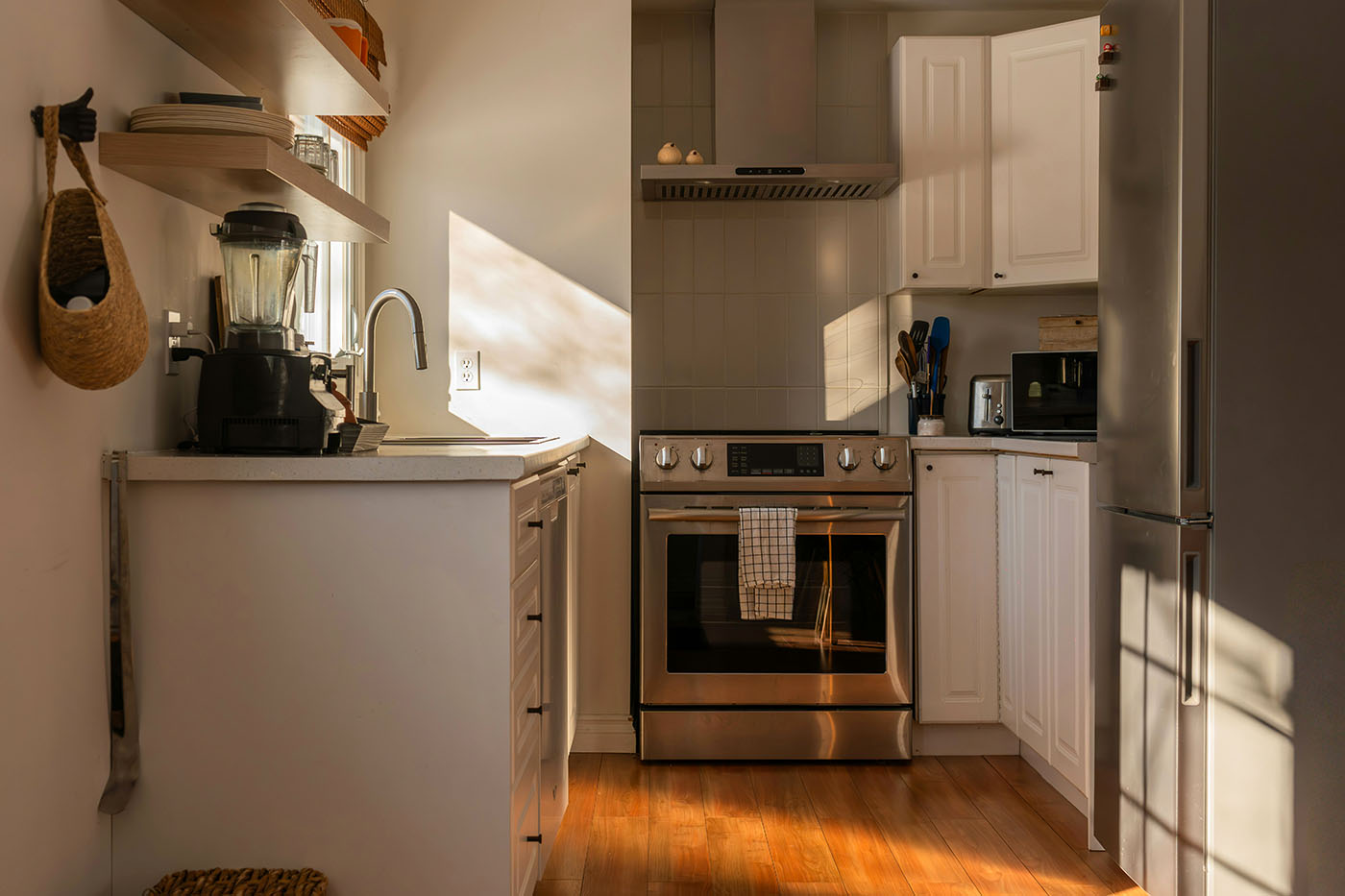
Health-e Communities Pilot: What Ava Learned from Replacing Gas Ranges with Induction in 162 Homes
About Health-e Communities
The Health-e Communities Pilot was designed to better understand how replacing gas ranges with induction cooking affects indoor air quality, and what it takes to deliver that kind of electrification work at scale in Northern California homes.
To answer these questions, Ava launched a pilot program serving low-income households across Alameda and San Joaquin Counties. The pilot combined direct installation of induction ranges with before-and-after indoor air quality monitoring, creating a preliminary dataset on how cooking electrification changes indoor pollutant exposure.
Here is a summary of the pilot, what we learned, and how we’re moving forward.
For complete results, download the Health-e Communities Pilot Evaluation and Final Report.
Pilot Design and Scope
The pilot ran from October 2024 through September 2025 and completed 162 induction range installations across 15 jurisdictions, with a total cost of $1.27 million for both implementation and air quality monitoring. Households were selected using CARE/FERA enrollment and CalEnviroScreen data, with a focus on communities experiencing some of the region’s highest asthma rates.
The pilot was delivered at no cost to participants and included induction range installation, induction-ready cookware and educational materials, removal of existing gas ranges, indoor air quality monitoring before and after installation, and individualized air quality reports.
Ava partnered with Franklin Energy to manage implementation, site assessments, and installation logistics, and Berkeley Air Monitoring Group to lead the indoor air quality monitoring and analysis.
The pilot’s objectives extended beyond appliance replacement. Ava also wanted to better understand and learn from the operational realities of delivering direct-install electrification programs.
Key Findings
Indoor Air Quality
Almost every home in the study saw a drop in indoor air pollution levels. After induction installation, researchers observed statistically significant and consistent reductions in nitrogen dioxide (NO₂), a pollutant produced by burning natural gas. The overall median NO₂ concentration decreased by 70%, and the median number of minutes per day that kitchens exceeded the Environmental Protection Agency (EPA) threshold for unhealthy exposure dropped from 13 minutes per day to zero.
The pilot also found small but statistically significant reductions in carbon monoxide (CO), with a median concentration reduction of 17%.
Electrical Infrastructure and Permitting Challenges
While the air quality findings were clear, the pilot also revealed the barriers residential electrification projects can face.
21% of assessed projects were cancelled because of panel and/or electrical issues. The project team encountered recalled or unsafe electrical panels, damaged equipment, missing enclosures, pest infestations, and other code or safety issues during site assessments. Nearly half of completed projects required installation measures beyond a standard appliance replacement, including tandem breakers or circuit-sharing devices, which increased both installation complexity and cost.
Attrition was also substantially higher for renters and participants living in multifamily homes than for homeowners and single-family homes. In addition, 27% of the multifamily homes observed didn’t move forward because of panel or electrical issues, compared to just 12% of homeowners.
Permitting timelines added another layer of variability and complexity. Approval timelines averaged eight days across the pilot, but ranged from same-day to 65 days depending on jurisdiction, local requirements, and inspection availability.
Participant Experience
Despite the complexity, participant feedback was overwhelmingly positive. In an exit survey given immediately after installation, overall customer satisfaction averaged 9.9 out of 10 across all satisfaction metrics.
Health-e Communities Pilot participant“I don’t miss gas like I thought I would, because everything is quicker and cleaner.”
Before installation, the most common concerns were electricity costs, cooking performance, and the adjustment to leaving gas behind. One Stockton participant summed up a common hesitation: “My biggest question was whether cooking with induction would be as efficient as gas.”
In a follow-up survey after the pilot closed, participants highlighted the speed, ease of cleaning, and day-to-day convenience of induction, and most said they would not go back to gas. A few were also surprised by the air quality difference. One participant wrote: “What shocked me the most was how big a difference we had in air quality with just days of induction use.” Another noted: “That old smell is gone. I didn’t realize it was the gas stove.”
Ava is still analyzing energy bill data from participating households and will share findings when that analysis is complete.
Conclusions and Next Steps
The Health-e Communities Pilot provided a clearer understanding not only of how kitchen electrification improves indoor air quality, but also of the practical challenges involved in bringing electrification upgrades into existing homes across Alameda and San Joaquin Counties at scale.
Although the Health-e Communities pilot has concluded, its findings generated important operational and technical insights that will inform Ava’s future customer programs roadmap. Ava is reinvesting the remaining budget allocated for this initiative into future electrification efforts to better serve our customers.
For complete results, download the Health-e Communities Pilot Evaluation and Final Report.