Ava Completes First of Five Community Solar Projects, Benefiting Low Income Households
July 31, 2026
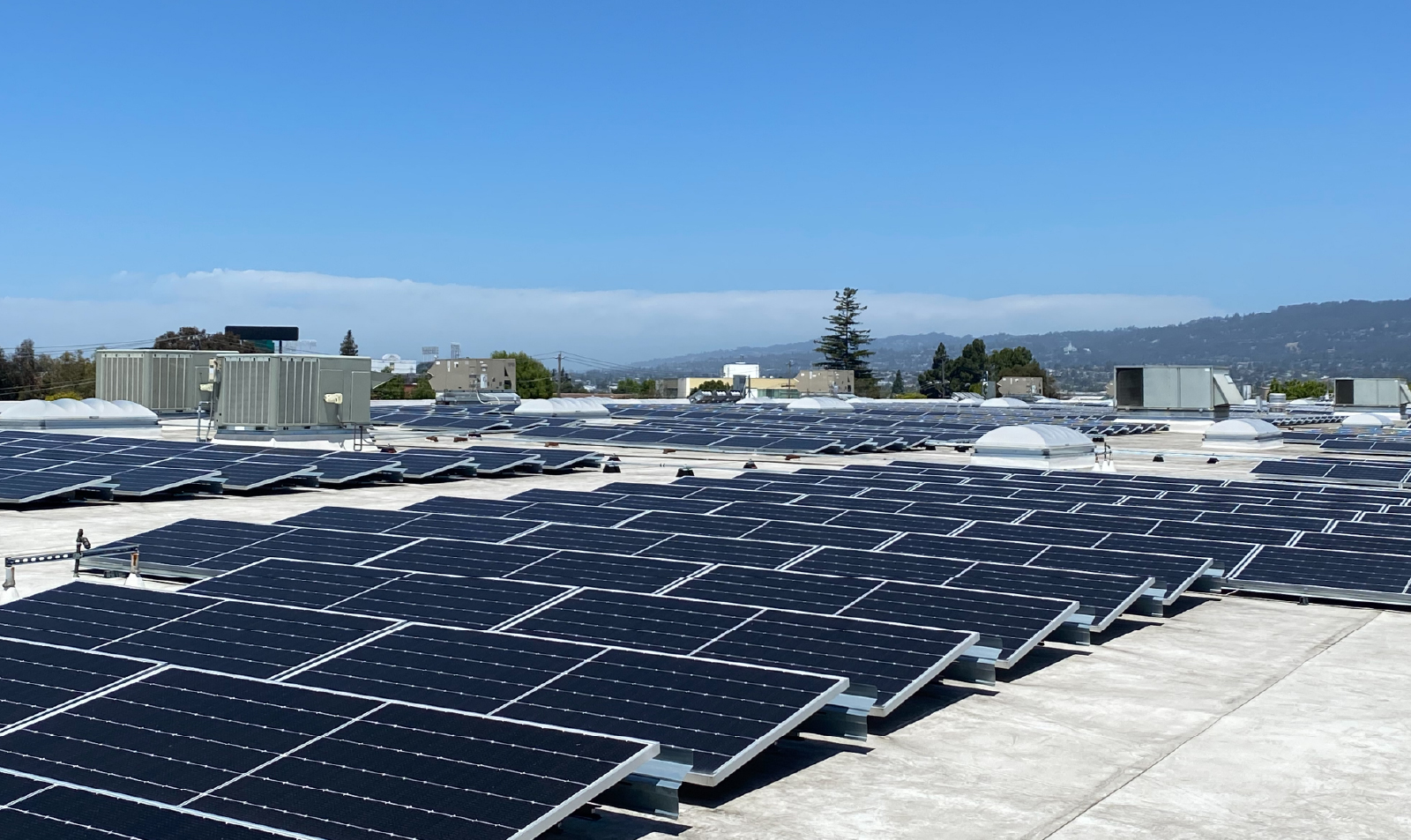
Ava’s new community solar project on the roof of an Oakland Prologis warehouse is providing 100% clean energy and a 20% electric bill discount to income-qualified households. More such projects are on the way under the DAC-GT program.
For many California residents, going solar can be a challenge. Some rent their homes, live in apartment buildings, have roofs that aren’t suitable for solar panels, or can’t afford to install them on their own. But thanks to a new slate of community-scale clean energy projects being built across Ava’s service territory, thousands of income-qualified Ava customers now have access to local, emissions-free energy at a lower price.
On June 5, 2026, Ava officials cut the ribbon on a new 720 kilowatt (kW) solar project in Oakland that will soon power about 300 income-qualified Ava households. Each customer will get 100% of their power from the sun and 20% savings on their electric bill.
“This project and program is serving our low-income historically marginalized community with lower cost renewable energy,” said Ava CEO Howard Chang at the ribbon cutting. “We hope that we can continue to accelerate our customers’ ability to electrify and do so affordably.”
The project was developed under the Disadvantaged Community Green Tariff (DAC-GT) program overseen by the California Public Utilities Commission. DAC-GT, known by Ava customers as Ava’s Solar Discount program, enrolls income-qualified customers who are in the California Alternate Rates for Energy (CARE) or the Family Electric Rate Assistance (FERA) programs and who live in a state-designated “disadvantaged community.” The solar project serving them must be in or within five miles of a disadvantaged community (though not necessarily the same one).
Under the disadvantaged community policy, communities are scored based on demographic, environmental, and health-related factors. Communities with the highest scores—that is, the most pollution and poverty—are prioritized for assistance through a wide variety of state programs.
The project in East Oakland is the first of five planned systems hosted by Prologis, the world’s largest industrial real estate company. All will be mounted on the roofs of the company’s modern logistics facilities, with projects in Hayward and San Leandro coming this year, and two more in Tracy in 2028. The total capacity will be 7.28 megawatts (MW), enough to serve over 3,000 households.
Those households are already enrolled in Ava’s Solar Discount program and enjoying the savings. Program administrators like Ava are allowed to use power from other renewable projects until the DAC-GT projects are built.
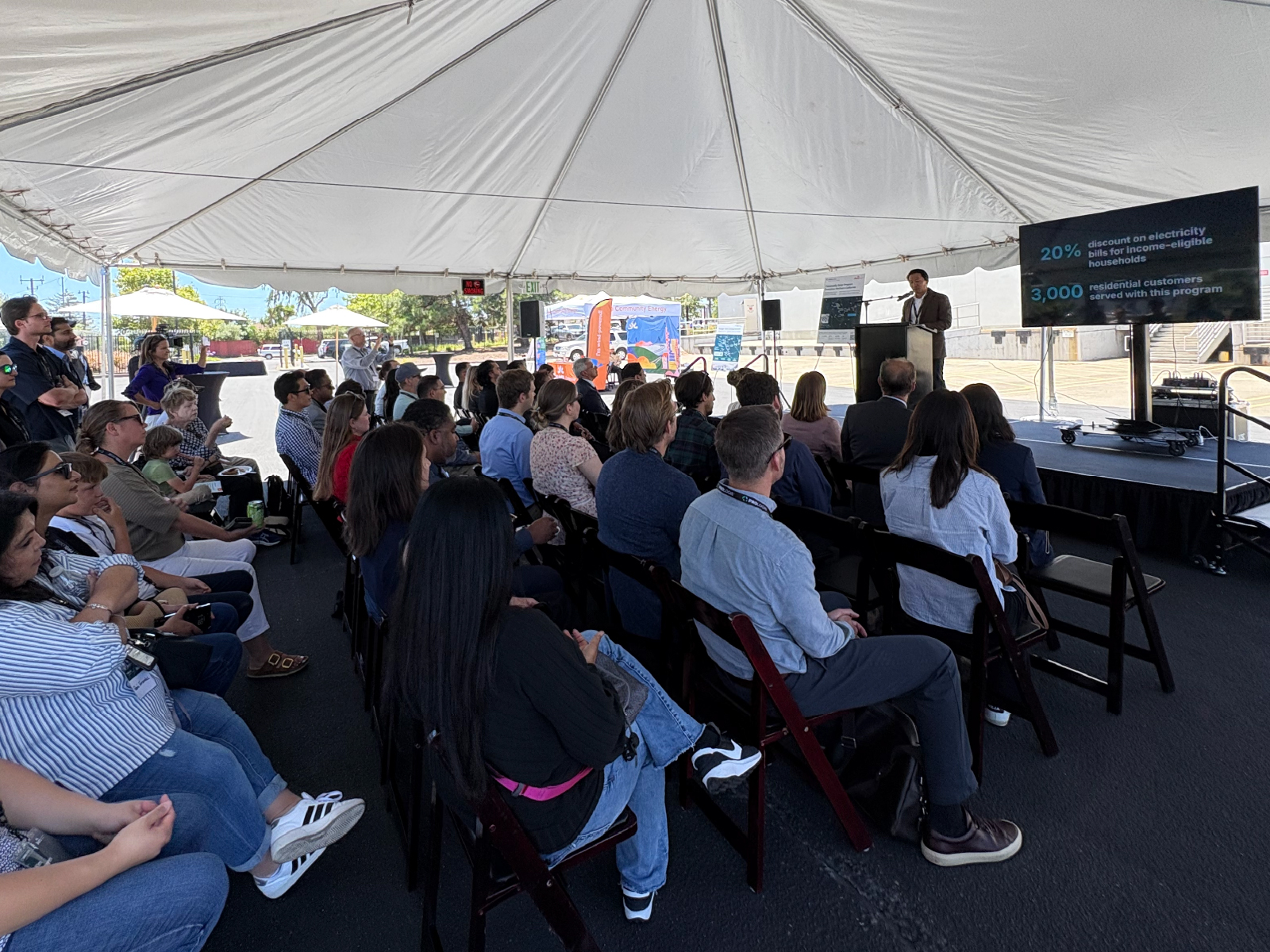
The 20% discount customers get is on top of the CARE discount of 30% or the FERA discount of 18%, making a serious dent in electric bills.
“On top of the bill saving for our most vulnerable customers, these projects create local jobs, enhance community resilience by localizing power generation, and promote economic development and environmental stewardship across our service territory,” said Annie Henderson, Chief Customer Officer at Ava.
Unlike some community solar programs in other states, where customers typically have to “subscribe” to participate, California’s DAC-GT program selects eligible customers for automatic enrollment. Per program guidelines, Ava prioritized customers residing in the disadvantaged communities with the highest scores. Ava has 164,000 households on CARE and 7,700 on FERA.
The Prologis projects fill Ava’s initial allocation. Now, program changes and the expansion of service into San Joaquin County have added another 11.25 MW, enough for about 4,700 more households. Ava recently went out to market to procure new projects to fill this expanded DAC-GT program capacity.
“We are expecting more diversity of projects in different locations,” says Eleanor Smith, Ava’s Account Rates and Equity Manager. “Expanding into San Joaquin County creates new opportunities for potential projects.”
The DAC-GT program is funded by state Greenhouse Gas (GHG) auction, or “cap-and-invest” auction proceeds and Public Purpose Program funds.
Statewide, the DAC-GT program is serving over 38,000 customers with 58 MW of clean, discounted solar power. An additional 43 MW are in development as of May, with another 132 MW still available under the program cap.