Faces of Ava: San Joaquin County Supervisor Robert Rickman
July 31, 2026
Moving from law enforcer to law maker, Robert Rickman has championed expanding Ava’s service to Tracy and San Joaquin County. He brings a focus on affordability to his seat on the Ava Board of Directors.
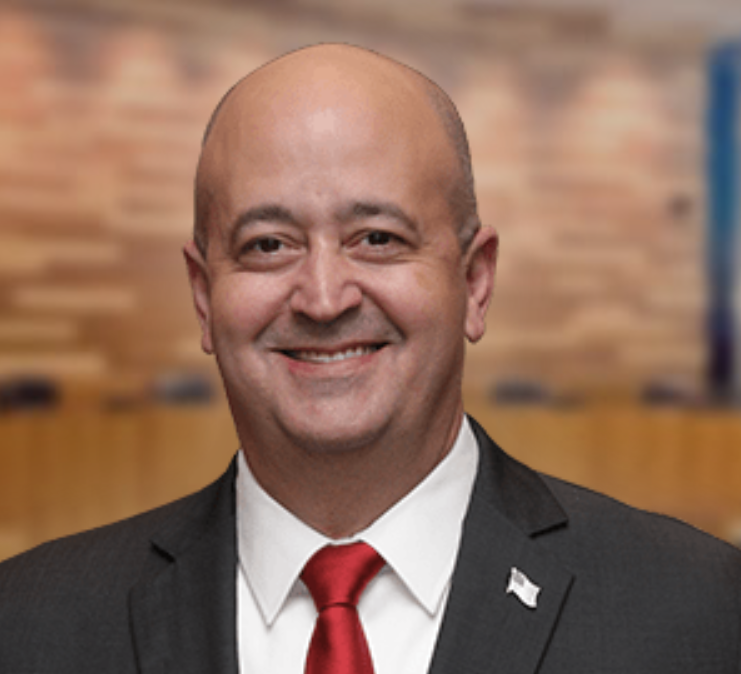
Young state trooper Robert Rickman didn’t like the looks of the car weaving down the streets of San Francisco. When he pulled the driver over for suspicion of driving under the influence, a search found a loaded rifle in the back seat. “He was on his way to work where he was going to kill people,” Rickman recalls.
That close call was just one of 27 years of stories Rickman acquired from his long career as a California Highway Patrol officer. This commitment to protecting others has endured into his current job as an elected official, where instead of catching criminals, he champions policies that promote cleaner air, sustainable farming, and access to affordable energy.
After nearly three decades in law enforcement, Rickman made the switch to politics and now serves on the San Joaquin County Board of Supervisors, representing the county on Ava’s Board of Directors. Before that, he spent ten years on the Tracy City Council—also an Ava member city—including as its Mayor.
Bringing Energy Choice to San Joaquin County
While his decisions as a Supervisor may not be as high-stakes as on that San Francisco street, they are still consequential. As households struggle to make ends meet in time of rising energy, housing, and food costs, affordability is a top concern.
“There is a lot of concern about the cost of living, and that’s why I pushed to bring Ava to Tracy and San Joaquin County,” he says. “Every little bit of savings helps.”
Rickman proposed to have Tracy join Ava in 2019, the first city outside of Alameda County to join, and unincorporated San Joaquin County in 2024. Service to the county officially began in May of this year, adding 60,000 customers to Ava service, including many on agricultural electric rates.
“People appreciate the savings,” he says, “but local control is also a big issue. When people are upset with energy rates, it’s tough to make your voices heard with PG&E and the CPUC, since they are not local. But with Ava you can have your voice heard. You can come to monthly meetings to voice your concerns, or things you are happy about. Local elected officials represent you on the Ava board, and that’s huge.”
From Trains to Highway Patrol to Law
Rickman grew up in Tracy in a railroad family. His father, grandfather, brother, and cousins all worked for the Southern Pacific and Union Pacific railroad, his father as a conductor and brakeman.
After college at Sacramento State, Rickman joined the highway patrol, working out of various Bay Area locations. Another highlight of his career was providing security for Gov. Schwarzenegger and former President Bill Clinton.
His passion for law and history led him to the Drivon Law School at Humphreys University in Stockton. After four years of night classes, he earned a law degree in 2008.
While he has never practiced as an attorney, he put his knowledge of law to work on the Tracy City Council, getting elected in 2010 and 2014, and serving as mayor from 2016 to 2020.
“Everything I’ve done—from law enforcement to public office—has been guided by a deep love for this community and a commitment to serving the people who call it home.”
He was elected as the 5th District Supervisor in San Joaquin County in 2020, and re-elected in 2024. The 5th District covers south San Joaquin County, and includes Escalon, Mountain House, Ripon, Tracy, and associated unincorporated areas.
Money and Growth in San Joaquin County
Fast growth in San Joaquin County has made some things easy, and other things quite difficult.
“We are in a great position fiscally,” he says. “The bigger issue is state and federal budget flows. There are a lot of unfunded mandates in the latest state budget.”
“There are programs and services that federal and state budgets fund but counties implement, like indigent health care, public hospitals, and food support programs. And the federal and state budgets are cutting or reducing funding, expecting counties to cover it.”
The California Association of Counties expects the state’s 58 counties to have a combined shortfall of $9.5 billion this year, largely due to cuts in social safety net programs. Rickman estimates the impact to San Joaquin County is between $50 million and $75 million.
Meanwhile, the county continues to see a lot of growth. Agriculture, the county’s largest industry, generates $7.8 billion in total economic output and $4.2 billion in value-added income, according to the University of the Pacific’s Center for Business and Policy Research. Agriculture employs nearly 35,000 residents in San Joaquin County, making it one of the most productive farm regions in the country.

At the same time, the county’s population has grown by 200,000 people in the last 20 years, with much of the new housing encroaching on farmland. Transportation and logistics are a booming business, as mega-warehouses around Stockton, Tracy, and Lathrop manage imports through the ports of Stockton and Oakland and distribution centers for Amazon and the U.S. military.
“The new business is good, it creates jobs, but we have to protect our fertile farmland,” Rickman says.
Clean Air and Transportation Initiatives
Farm trends are also changing, with farmers shifting from vegetables to nuts, especially almonds, over the past 15 years. And since Central Valley air quality rules don’t allow for open burning, orchard managers are struggling to manage the disposal of waste wood.
From his seat on the board of the San Joaquin Valley Air Pollution Control District, Rickman is pushing for state support for the “Whole Orchard Recycling and Carbon Sequestration Program” as an alternative to burning. The state appropriated $180 million in 2021 to support implementation over three years, but has not funded it since.
One bright spot for air quality is progress toward developing a new train connection to the Bay Area, Valley Link. The current line, the Altamont Corridor Express (ACE) train, runs from Stockton to San Jose, but does not connect to the Bay Area’s main transit system, BART.
Valley Link expects to finish design this year and start construction in 2028. Ultimately it will be a 42-mile, 7-station passenger rail system extending from the Dublin/Pleasanton BART Station in Alameda County to a North Lathrop Station in San Joaquin County.
Trains will run on electricity, powered by batteries, helping cut carbon emissions by up to 42,650 metric tons by 2040. The San Joaquin Council of Governments (SJCOG) Board of Directors allocated $10 million toward the project at its March 26, 2026, meeting.
As Chair of the Tri-Valley / San Joaquin Valley Regional Rail Authority, Rickman is carrying on in the family tradition of working the rails.
“Valley Link is a smart investment that will keep our communities connected, help reduce traffic congestion, and give people more time with their families.”