New Ava Program Turns Home Batteries into Grid Resources
July 31, 2026
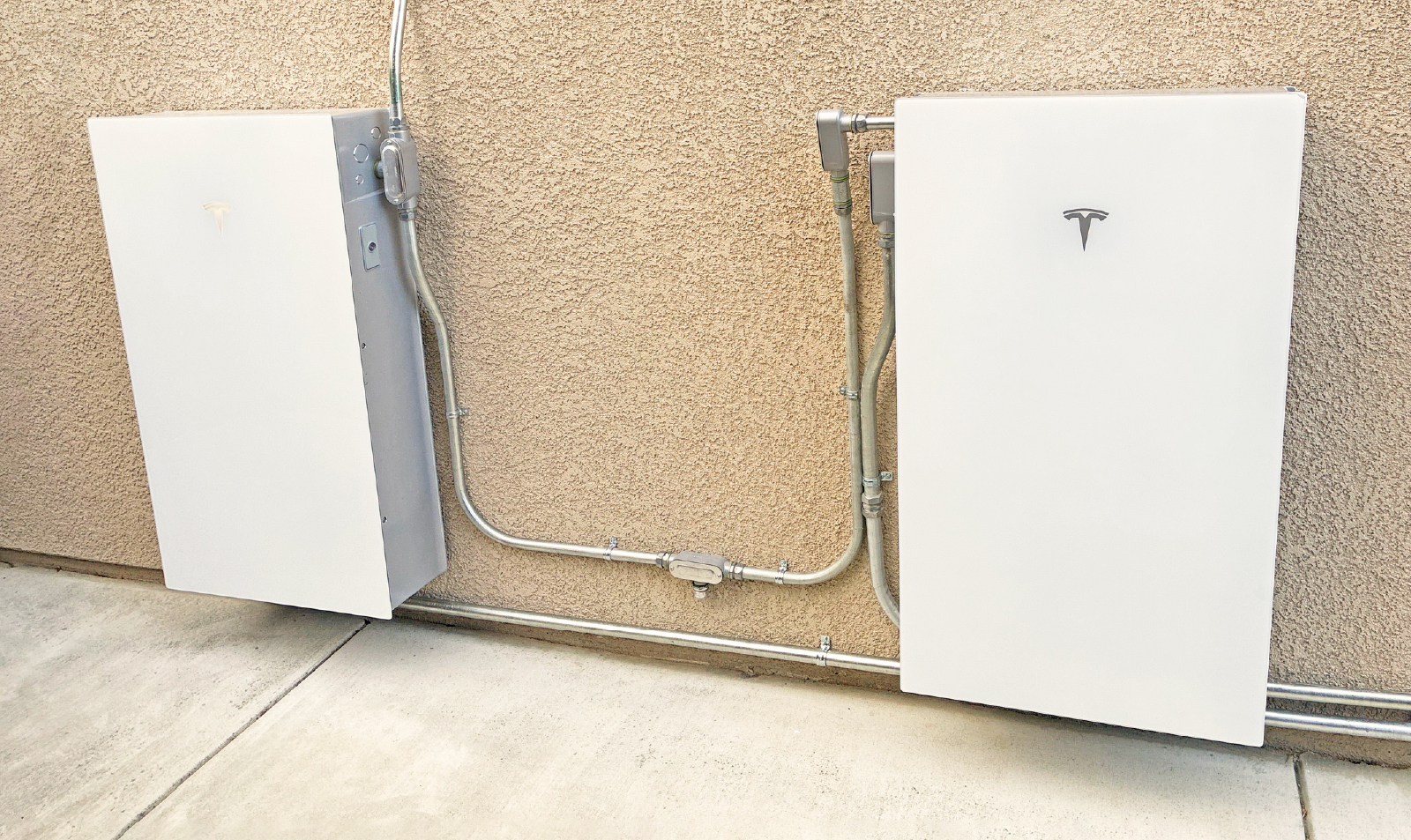
With SmartHome Battery, Ava is looking to put thousands of home batteries to work providing benefits to the grid and to all Ava customers.
A growing number of homes are installing batteries to go with their solar systems. Ava’s new SmartHome Battery program is seeking to tap those batteries to maximize benefits to the grid, while providing their owners with a new source of revenue.
Battery Adoption by the Numbers
As of July 2025, homes and businesses across California have installed more than 284,000 batteries, with a total capacity of just over 3,000 megawatts (MW), or about 800 megawatt-hours (MWh). Residential customers in Ava’s territory have about 15,336 of those batteries, with a total capacity of 111 MW. An additional 203 systems at commercial customer sites add another 76 MW.

Not surprisingly, many of these home battery systems are in the hilly areas of Ava’s territory, where the “wildland urban interface” makes wildfires more likely, and thus are more often subject to public safety power shutoffs by PG&E. State incentives for home batteries, such as the Self Generation Incentive Program (SGIP), have long emphasized such areas.
Home batteries can also provide greater value to customers when combined with solar systems. Under the Solar Billing Plan, new solar customers have a greater incentive to capture any excess daytime generation and use it at night, rather than sell it to the grid at a low price.
But batteries can do even more than that. As more batteries are installed, they can be controlled en masse—or aggregated—to provide services to the grid, like meeting demand during evening peaks. When bundled together they work as a virtual power plant (VPP), that is tapped to meet grid needs.
Ava wants to aggregate 20 MW of residential batteries into a VPP, but also make sure it delivers benefits that work to lower costs for our customers over time.
Making the Virtual Real
A VPP can provide “demand response,” where customer-sited distributed energy resources (DERs), like batteries, are controlled to help the grid, especially when prices are high or the grid is overloaded. Batteries are especially good at operating flexibly, but a VPP can also consist of electric vehicles, smart thermostats, and electric water heaters.
A VPP can function very much like a conventional power plant, providing energy and capacity services when called on by grid operators. But unlike a typical gas-powered peaker plant, a VPP like Ava’s provides 100% clean power. It can give utilities greater awareness and control of the grid—including both power generation and load resources—increasing reliability and cutting costs.
Ava has begun directly enrolling VPP customers in SmartHome Battery, and expects most will come through partnerships with storage aggregators since most Ava customers get their batteries from these companies. Customers who own their battery get paid directly for participating in the program, offering an additional return on their investment. Other customers often obtain a battery by leasing it through a third-party company; the customer receives savings on their bill while the third-party retains control of the battery capacity and can enroll it in a program like SmartHome Battery.
This market-based approach is increasingly important as funding for state programs becomes more uncertain. The long-running SGIP program and the newer Demand Side Grid Support (DSGS) program are both running low on cash, and their prospects for receiving more funding are unclear. DSGS, for example, has over 1 gigawatt of resources enrolled, but the California Legislature and the Governor have yet to agree on whether to extend the program beyond 2026.
Although the potential reliability benefits of VPPs are promising, at times there can be a gap between the total capacity of the systems enrolled and what they actually deliver when called upon.
“We are taking a reliability-focused approach to aggregators,” says Forrest Csulak, Ava’s Distributed Energy Resources Associate. “We may be one of the first nationwide to have such strong performance requirements, with enforceable performance metrics. We are unique in that we have a lot of batteries in our territory already, so we can reach scale more quickly by tapping existing assets.”
That rapid scale can give better insight into how batteries are being used now, and how they could be used going forward. “We think some residential batteries currently are not doing anything except waiting for an outage,” he says. “That’s a missed opportunity that we can tap into for our customers.”
How the Program Works
Under the SmartHome Battery program, Ava offers customers an up-front installation rebate to add a battery to a new or existing solar installation, then pays customers to participate over a five year term. This added value is especially important for offsetting some lost customer incentives, including the federal Residential Clean Energy tax credit for customers that purchase their systems, which ended on December 31, 2025.
For new installations, Ava offers a rebate of $90 per kilowatt-hour (kWh) of battery capacity a customer elects to enroll in the program, or $500 per kWh for income-qualified customers. A typical home battery, like the Tesla Powerwall2, might have 10-13 kWh of capacity, and customers can choose how much of their battery’s capacity will participate in the program, ranging from 40% to 80%. For income-eligible customers the Ava rebate can be combined with other incentives, such as SGIP.
Customers are then paid $3 per month per kWh of capacity elected for the program and Ava is allowed to utilize the batteries during a “grid event” or periods of particularly high demand. For example, a customer who shares 80% of a 10 kWh battery will earn $24 in participation payments per month.
When the VPP is not needed for the grid, the customer can use the battery for their own savings, such as reducing consumption during expensive on-peak periods. If the grid goes out, the battery is there for the customer to use. Ava has called one event since the program launch and customer batteries behaved as expected; all batteries responded to the VPP signal, with the batteries located in areas with weather alerts retaining their capacity in case of grid outage. Grid events are most likely to happen in the hot afternoons and evenings of July, August, and September. Participation is capped at 80 hours per year, leaving the customer in control of their own battery more than 99% of the hours of the year.
“Our goal is to make sure customers benefit without adding more to their busy lives.”
The SmartHome Battery program is predated by an earlier Ava program, Resilient Home, which started in 2019. Rather than being triggered by reliability events, the Resilient Home program has an automated cycle of charging a battery with solar in the daytime and discharging during evening peak hours, which benefits both the customer and Ava’s overall needs. The program currently has 992 customers with just over 1.8 MW of battery capacity, and is still in operation though not enrolling new customers.
SmartHome Battery also joins Ava’s SmartHome Charging program, which enlists residential customers to charge their electric vehicles when power is cheaper and renewable energy is most available. This creates more flexibility and optimizes demand to alleviate grid stress.
For SmartHome Battery, Ava has budgeted $7.5 million for market-rate customers and $3.75 million for income-qualified customers, and aims to reach up to 3,080 market-rate customers and 830 income-qualified customers. As of June 2026 there are 19 qualified installers active in the program and 18 approved battery models, so customers have many options when it comes to installing the right battery for their home.
Reliable VPPs Can Benefit Everyone
Ava also benefits by counting some battery capacity toward its “resource adequacy” or RA requirements. All power suppliers are required to procure capacity to meet their share of the state’s peak demand. While RA has traditionally been supplied by power plants, it is increasingly being met with renewables and batteries at utility-scale. Ava is building our VPP to determine how distributed installations can reliably integrate into our RA portfolio.
But not all of that capacity is accepted in state policies and programs. That’s why Ava supports SB 913 from Sen. Josh Becker, which would make it easier for aggregated DERs to be counted in RA compliance filings by utilities, CCAs, and power retailers who must meet RA requirements, so long as those resources meet strict requirements to demonstrate that they can be dispatched when called upon. Allowing VPPs to demonstrate greater RA value could potentially lower Ava’s overall energy procurement costs, meaning more savings for Ava customers.
The legislation reflects growing confidence that batteries and other DERs can deliver for the whole system. SmartHome Battery is helping to prove the concept.
“To get to reliability you have to understand the customer,” says Csulak. “If a VPP is going to be a good guest in their home, we need to understand how the devices behave, and that customer needs are being met.”
“SmartHome Battery makes it as simple and seamless as possible,” he adds. “Our goal is to make sure customers benefit without adding more to their busy lives.”