Sequoia Grove Construction Update: Summer 2026
Since breaking ground in August 2024, Sequoia Grove has transformed from an empty lot to a nearly finished neighborhood, made up of ten homes that use the latest climate-friendly innovations and run entirely on electricity. The team at Habitat for Humanity East Bay/Silicon Valley (Habitat EBSV) has kept construction running smoothly, and is preparing for a Welcome Home Community Festival in October 2026.
As a development sponsor, Ava funded the efficient electric systems that power each home, and we’ve also volunteered three times at the construction site. Here’s where things stand, and what it means to Ava’s staff to help make these homes a reality.
Home Electrification
Solar and Battery Backup Systems
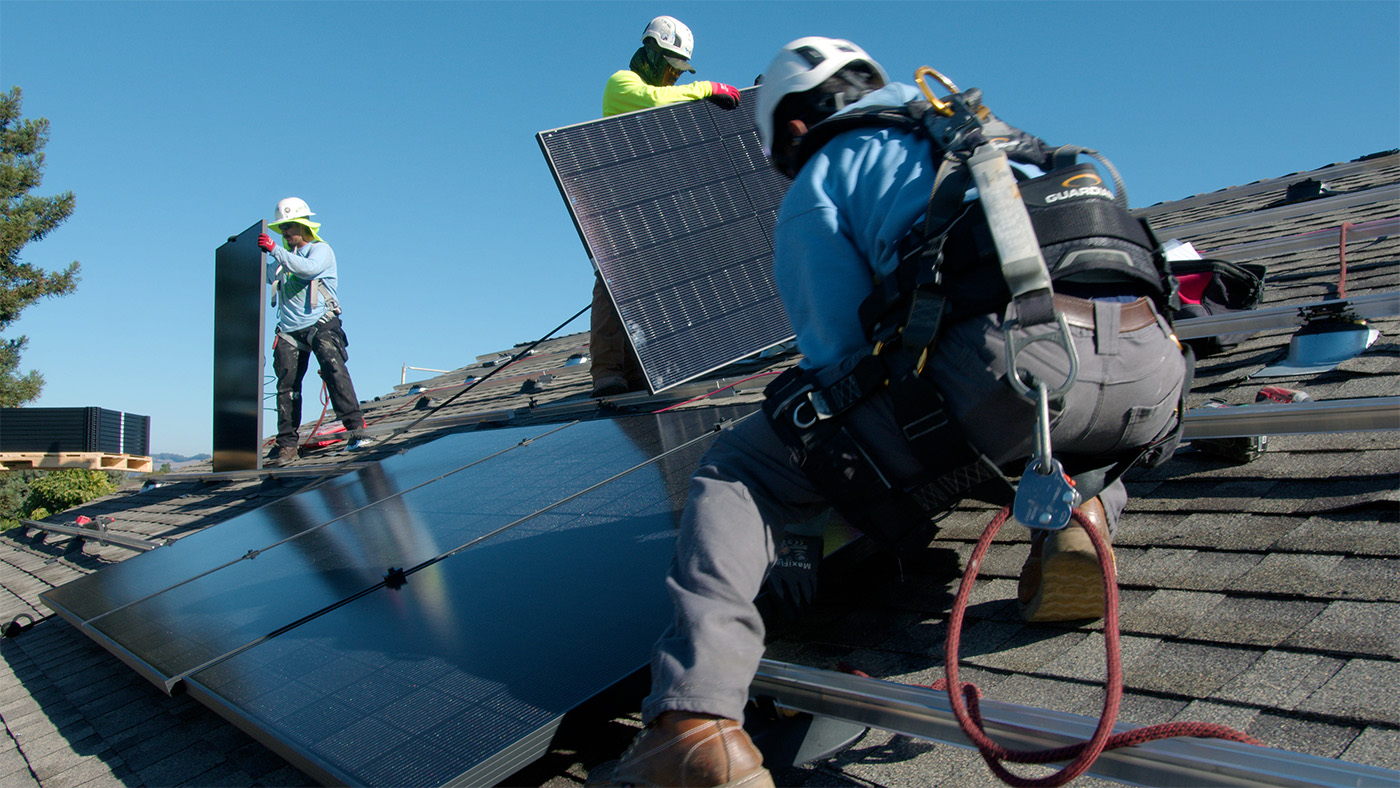
This spring, GRID Alternatives (a nonprofit solar installer and workforce training organization) completed rooftop solar installation across all ten homes. Each home has its own independent 6.6kW system, sized to generate up to 8,400 kilowatt hours per year. These systems are designed to cover full electricity usage for each home—meaning residents should only need to pay for PG&E’s non-bypassable charges like the Base Services Charge, and not for the electricity itself.
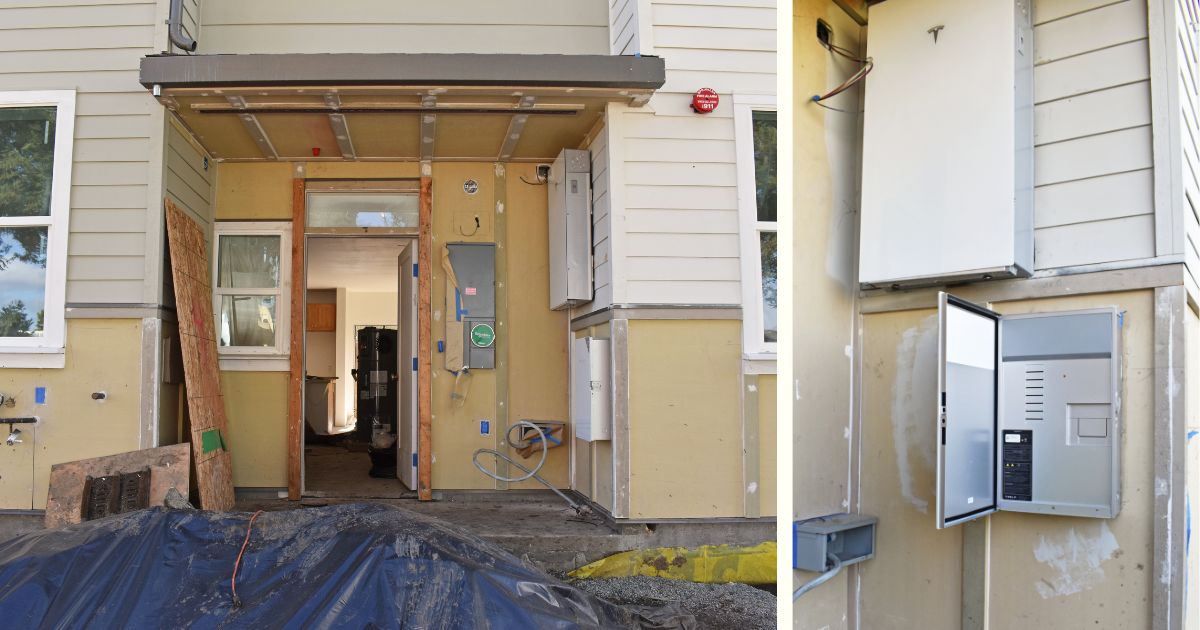
Each home also has an 11.5kW AC battery backup—the first time Habitat EBSV has ever installed batteries at one of their developments. During a power outage, it can run essentials for about four hours: the refrigerator, lights, phone charging, and some heating or cooling.
“They don’t have to worry about food going bad in the fridge during an outage,” said Jared Slaybaugh, Assistant Construction Manager with Habitat EBSV. “If it’s a heat wave, they can stay cool. Basically, these batteries allow them to just keep living their life, uninterrupted.”
Installing the batteries posed some interesting design challenges for these townhomes. “We encountered a bit of a puzzle when it came to maximizing the light in these homes through windows, while maintaining the necessary distance between batteries and building openings,” said Ben Grubb, Senior Construction Project Manager.
For some of the batteries, the construction team built out a “wing wall” to create extra space between the battery, the windows, and the front door. “We got creative, and now we have a nice, safe place to pop our solar battery and inverter,” said Ben. “All their local systems are now all in the same place.”
Heat Pump HVAC
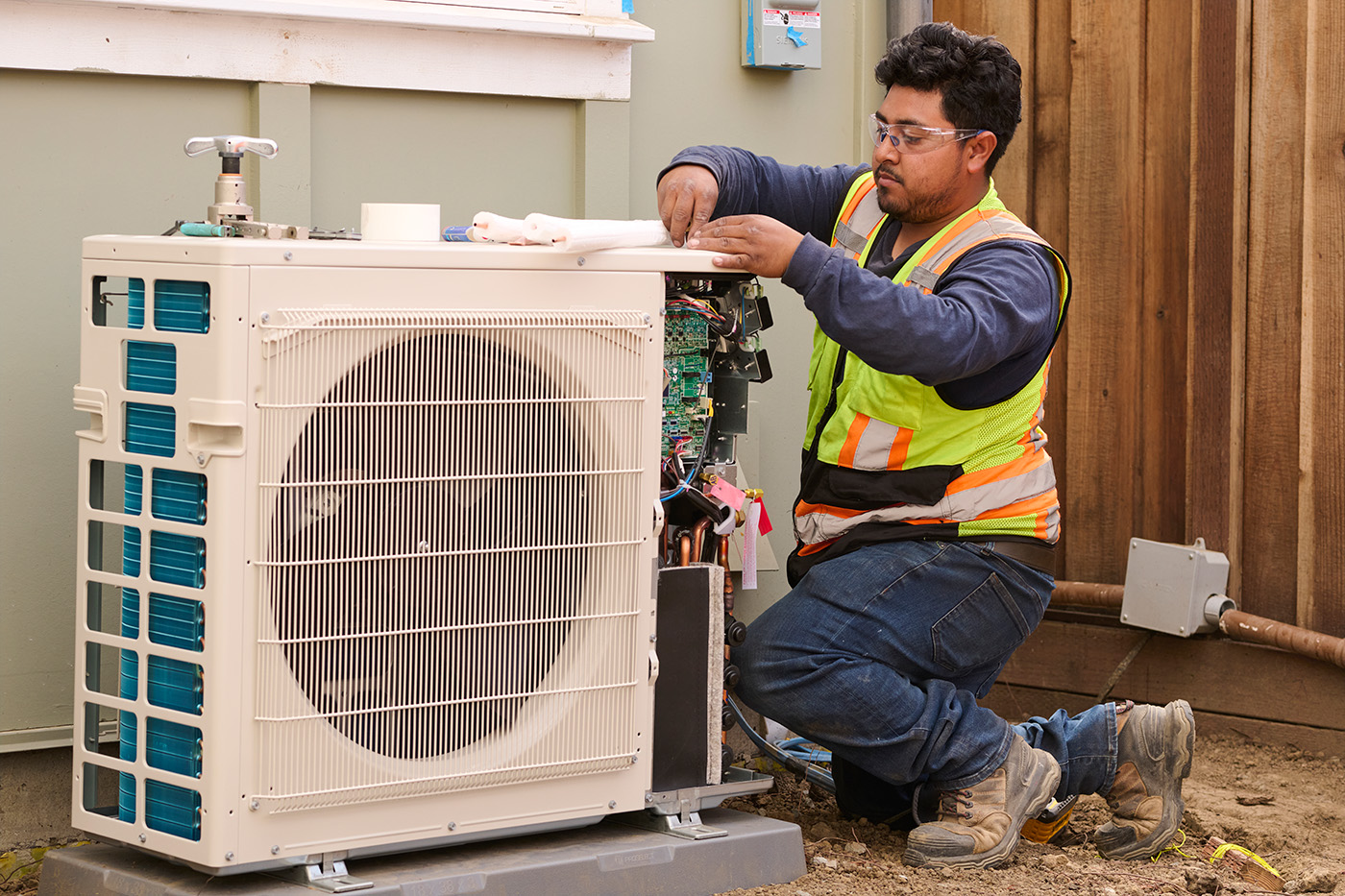
Heating and cooling runs on heat pump systems throughout. Heat pumps move heat rather than generating it, making them more efficient than electric resistance heating and cleaner alternatives to gas furnaces.
“During wintertime, the system is pulling energy from the outside air and bringing it in. In summertime, it’s pulling cold air from the outside and bringing it into the units,” said Ben.
For further energy efficiency, each home is designed with climate-smart “cool roofs,” Energy Star windows, lots of insulation, and more techniques to endure high heat comfortably.
Heat Pump Water Heaters
Each home has a heat pump water heater, which uses significantly less energy than a conventional electric model to supply hot water for showers and daily use. Similar to heat pump HVAC, heat pump water heaters pull heat from the surrounding air to heat water. In some of the homes, they are located in an insulated room under the stairs; other homes have a small outside closet.
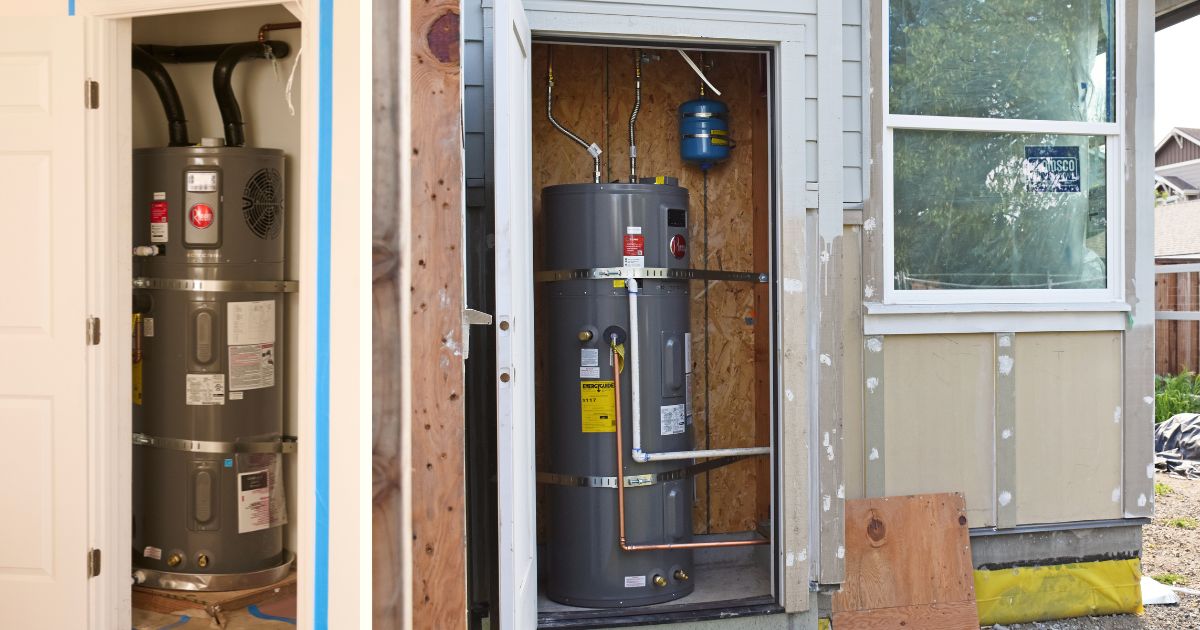
“The locations are very intentional. We’re trying to make them as central as possible to shorten the runs from the heat pump to their fixtures,” said Ben. “At the same time, we also want to take acoustic concerns into account. The sheetrock we’re using is called QuietRock, and it’s great for both insulation and reducing noise.”
Induction Ranges
Each kitchen at Sequoia Grove is equipped with an induction range—the most efficient form of cooking on the market. Induction uses magnetic energy to heat cookware directly for faster, safer, and more precise cooking.
Previous Habitat EBSV developments have used electric resistance cooktops, which have the benefit of being gas-free but are much less efficient than induction.
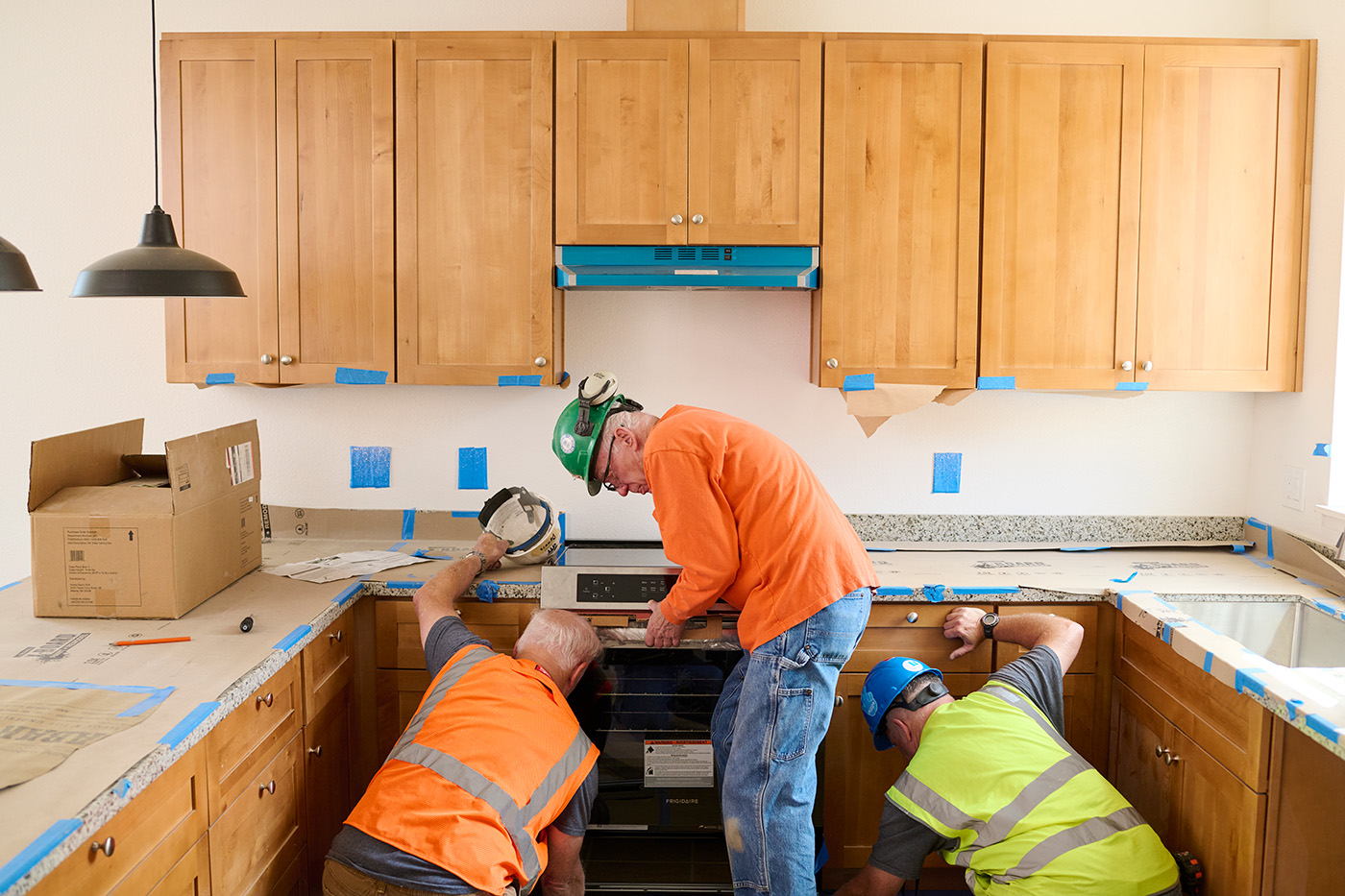
Installing induction required some upfront electrical wiring considerations. “The electrical code requires a 30 amp line going to the range,” said Ben. “But we’re actually going to be using a more efficient unit than that. The electrical code hasn’t caught up to how efficient this technology is. We’re hoping in future developments, we can incorporate this efficiency more into the way the houses are wired.”
Volunteering with Habitat for Humanity EBSV
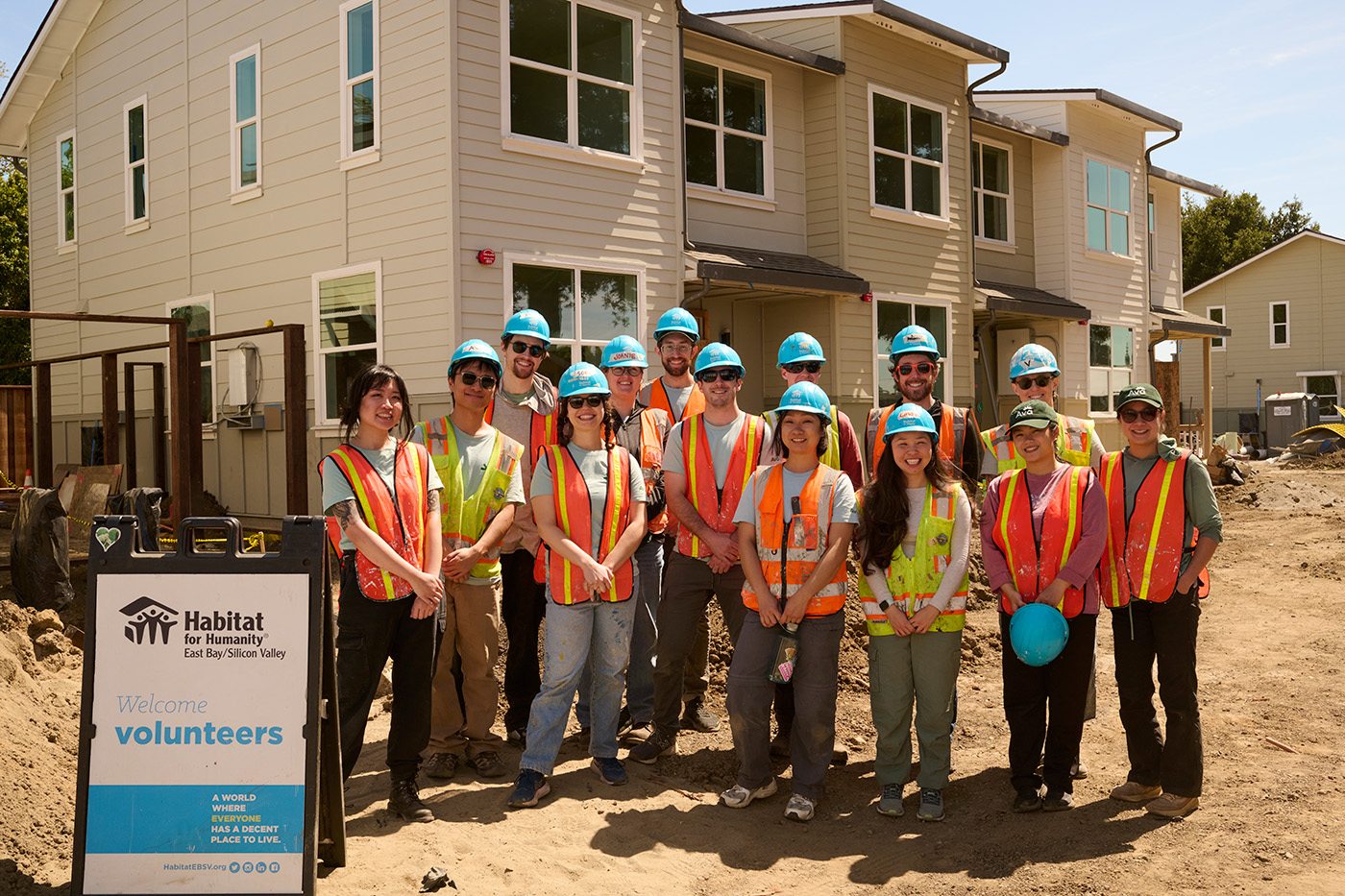
This summer, Ava staff returned to Sequoia Grove for two more volunteer days, working alongside Habitat and AmeriCorps crews on interior finishing, which included door frame prep, spackling, sanding, and painting.

Karen Lee, Senior Manager of Power Resources at Ava, enjoyed the work day with her colleagues, and was particularly interested in seeing the solar and battery systems powering these homes. “Someday soon, these batteries might be a part of Ava’s virtual power plant,” she said.
“It’s so gratifying to see electrification come to life in a physical way,” said V Gerber, Ava’s Product Manager for Ava Charge. “Seeing local infrastructure that we have a hand in supporting is a really meaningful opportunity.”
James Cunningham, Ava’s Outreach and Community Engagement Manager, worked as a volunteer coordinator at Habitat EBSV early on in his career. “Being here is kind of like a full circle moment,” he said. “It’s amazing to see everybody come together to help build these homes and make this all possible for families who need it most.”
Preparing for Move-In
Sequoia Grove puts Ava’s mission in concrete. Solar and battery systems, heat pumps, and induction cooking are now standard features in ten affordable homes built for some of our most vulnerable customers. We’re proud to support this development, and look forward to the future of clean, energy-efficient construction!