Solar Billing Plan
The Solar Billing Plan (SBP) is the successor program to Net Energy Metering (NEM) 2.0. Customers are billed under the SBP if they meet any of the following conditions:
- Their solar system application to interconnect was completed after April 14, 2023.
- Their solar system has completed a 20-year legacy period on NEM 1.0 or NEM 2.0. Eligible customers will transition based on the timing of their PG&E true-up month. Customers on NEM 1.0 who transitioned to NEM 2.0 at the end of their legacy period are not permitted to receive an additional 20 years on NEM 2.0.
- The generation capacity of an existing solar system increased by 1 kW or 10% of the current system size.
How the SBP Works
The SBP tracks the flow of energy between your solar system and the electrical grid and accounts for the amount of energy you import and export. Ava’s SBP policy aligns closely with PG&E’s policy, but offers Ava customers additional export incentives through the Ava Export Bonus Credit for CARE/FERA customers and the Ava Peak Hours Export Bonus Credit for all other customers.
Monthly Billing
Each month, electricity you use from the grid (imports) and the excess solar energy you send back to the grid (exports) are calculated separately:
- Imports are charged at the retail electricity rate that aligns with your electric rate schedule. Residential SBP customers are required to be on the E-Elec rate plan.
- Exports earn Energy Export Credits (EECs) based on the value of electricity at the time it is sent to the grid. Credit amounts vary by hour and day.
At the end of each monthly billing cycle, your export credits are applied to your electricity charges.
- If your available credits fully cover your monthly charges, you won’t owe anything for electricity that month, and any remaining credits will roll over to future bills.
- If your monthly charges are greater than your available credits, you’ll pay the remaining balance.
Additional Export Bonus Credits
In addition to Energy Export Credits, eligible customers will receive the following Bonus Credits for exported energy.
- Energy Export Bonus Credit (EEBC): New voluntary (not required per CEC code) residential solar installs will receive additional credits for exports depending on the year they interconnect. The applicable EEBC value will be locked in for the customer for nine years. PG&E also provides this credit to their customers.
| Interconnection Year | Residential $/kWh | Income-Qualified $/kWh* |
|---|---|---|
| 2023 | $0.022 | $0.090 |
| 2024 | $0.018 | $0.072 |
| 2025 | $0.013 | $0.054 |
| 2026 | $0.009 | $0.036 |
| 2027 | $0.004 | $0.018 |
- Ava Export Bonus Credit for CARE/ FERA: All CARE and FERA customers will receive an extra $0.01/ kWh for exports. This is only for Ava customers.
- Ava Peak Hours Export Bonus Credit: All non-CARE/FERA customers will receive an extra $0.025/ kWh for exports between the hours of 3 and 8 pm. This is only for Ava customers.
Ava’s Annual True-Up
- Every April, Ava performs an annual true-up and compensates you for any excess electricity your system generated over the previous 12 months.
- Your annual compensation is based on surplus kWh multiplied by the Net Surplus Compensation rate (PDF), minus the approximate value of credits already provided to you for the same energy.
- For balances less than $100, Ava applies a rollover credit to your bill, which is applied toward future Ava generation charges. For balances greater than $100, Ava issues payment through your preferred payment method. Payments are typically sent in June-July following the April true-up and issued through an Ava authorized third-party vendor, Choice Digital.
Resources
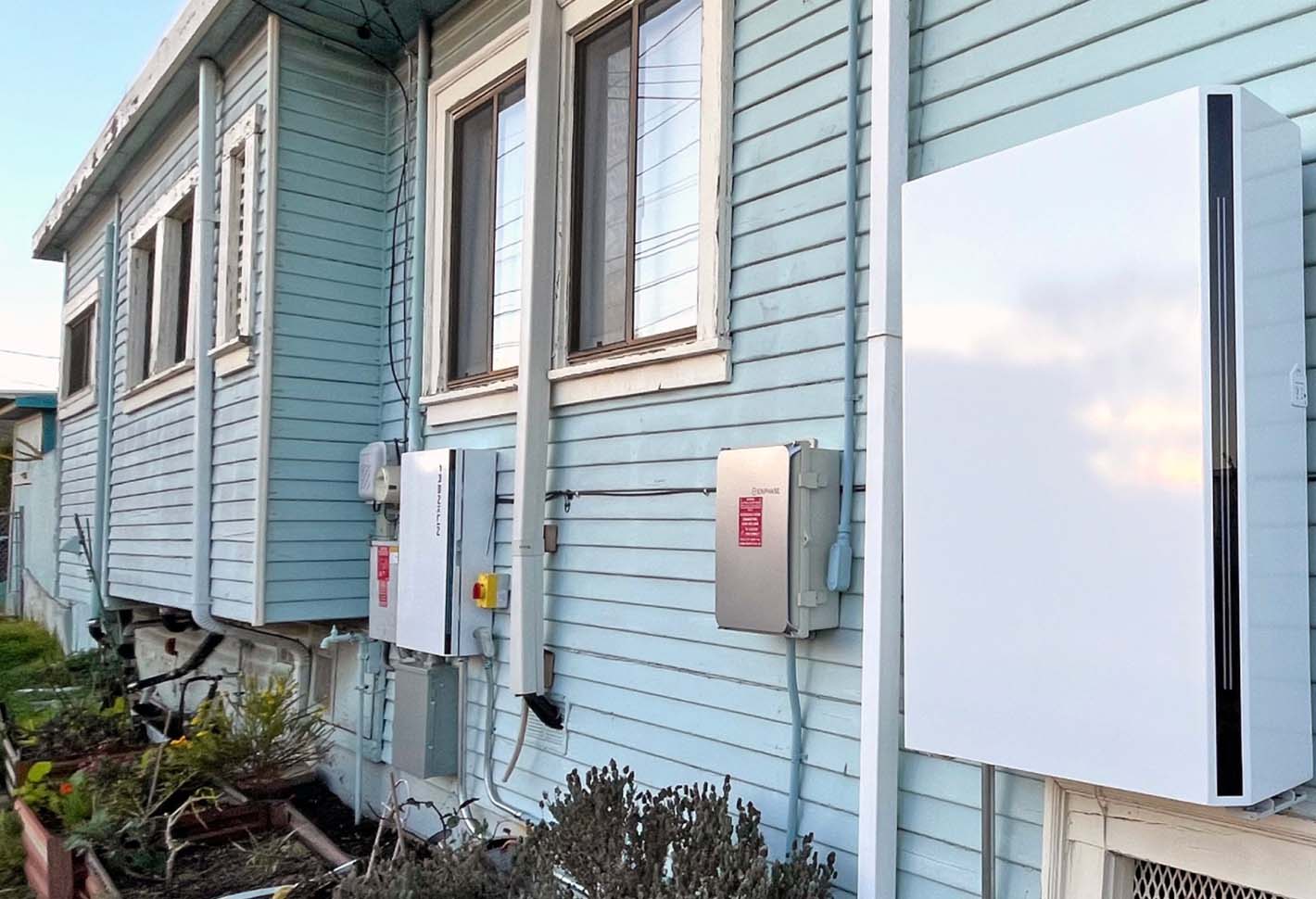
A home battery saves you money and gives you energy independence. SmartHome Battery helps you pay for it.
The Solar Billing Plan Frequently Asked Questions
How do I know if I am on the SBP?
You can verify your solar policy by checking the first page of your PG&E bill. Under the “Your Enrolled Programs” section, your bill will display “Solar Billing Plan.”
If I am an Ava customer, do I also earn export credits with PG&E?
Yes. As an Ava customer, you are a joint customer of Ava and PG&E. Ava provides electricity generation, and PG&E provides transmission and distribution services. When you export to the grid, you earn both delivery credits with PG&E and generation credits with Ava. Your delivery credits, referred to as “Energy Delivered” credits on the bill, are used to cover PG&E delivery charges while your generation credits are used to cover Ava generation charges.
What is the difference between monthly statements and the annual true-up in April?
All SBP customers are billed monthly. Charges from imports and credits from exports are summed to calculate your monthly bill. You pay for consumption monthly if you do not have enough SBP credits in your account balance to cover monthly charges. If you generate more electricity than you use in a given billing month, the excess SBP credits will rollover to the next month.
Every April, Ava conducts an annual true-up. If you generated more electricity than you consumed during the previous 12 months, you will receive compensation for the surplus generation at the Net Surplus Compensation (NSC) rate, minus the approximate value of credits already provided to you for the same energy. Ava applies a rollover credit to your bill for balances less than $100, which is applied toward future Ava generation charges. Ava issues payment for balances greater than $100 through your preferred payment method. Payments are typically sent in June-July following the April true-up and issued through an Ava authorized third party vendor, Choice Digital.
Is there a separate Ava and PG&E annual true-up?
Yes. All Ava and PG&E SBP customers are billed monthly and receive an annual true-up statement which compensates customers who have an annual surplus generation that amounts to a credit balance. You will have separate true-ups with Ava for your generation charges and PG&E for your delivery charges. Ava issues annual true-up payments for surplus generation each April. Your PG&E annual true-up may occur in a different month than your Ava annual true-up.
What is the difference between NEM and SBP?
NEM customers are charged or credited at the retail electricity rate based on their net energy usage each month. The SBP handles imports and exports of energy separately. Imports are charged based on the retail rate and exports are credited at the Energy Export Credits (EEC) rate, which varies by day and hour. Customers’ charges and credits are then netted to calculate the monthly bill.
All SBP customers are billed monthly. Unlike NEM, the program does not include an annual billing option, where charges roll over until the true-up date.
Does being an Ava customer impact my transition from NEM to SBP?
No. Customers who complete a full 20 years on Net Energy Metering (NEM) transition to the Solar Billing Plan (SBP) with both Ava and PG&E, in line with State legislation.
How will I transition from NEM to SBP? Will I true-up and lose my NEM credits?
Customers will see their NEM credits transfer into their Energy Export Credit balance with Ava. They will not experience an off-cycle true-up of their Ava generation charges and credits. The exception is NEM customers on Ava’s annual billing plan, who pay annually in April instead of monthly. These customers will undergo a true-up when they transition to SBP in order to move to monthly billing.
What happens to my credits if I close my account or leave Ava prior to the April true-up period?
Accounts that terminate or leave Ava service prior to April will receive payment for any surplus generation that amounts to a credit balance. Customers who opt out and return to PG&E should be advised that PG&E will perform a true‐up of their account, and that PG&E’s standard terms for transitional rates apply to customers with less than a six‐month advance notice if they have been an Ava customer for 60 days or more.